


5 Key Criteria to Consider When Choosing a Concrete Paver and Block Machine

When choosing a concrete paver and block machine, it is not sufficient to evaluate only the machine’s technical specifications. Production capacity, target product variety, automation level, mold system, plant infrastructure, and after-sales support should all be considered together. Selecting a system with unsuitable capacity or one that does not match the production plan can make efficient operation of the production line more difficult.
The main selection criteria are:
-
Production capacity and product variety
-
Automation level and production line structure
-
Vibration, pressing, and mold compatibility
-
Plant space and production flow
-
Technical service, spare parts, and manufacturer support
Noval Makine offers concrete paver and block machines in different models designed for various production capacities and operational requirements. For this reason, the selection process should focus on the overall plant structure rather than a single technical value.
1. Production Capacity and Product Variety
The first criterion when choosing a concrete paver and block machine is the planned production volume. The number of products the machine can manufacture per press cycle should be evaluated together with the shift schedule and targeted daily output. A machine with insufficient capacity can make production targets difficult to achieve, while excessive unused capacity may result in inefficient planning of plant resources.
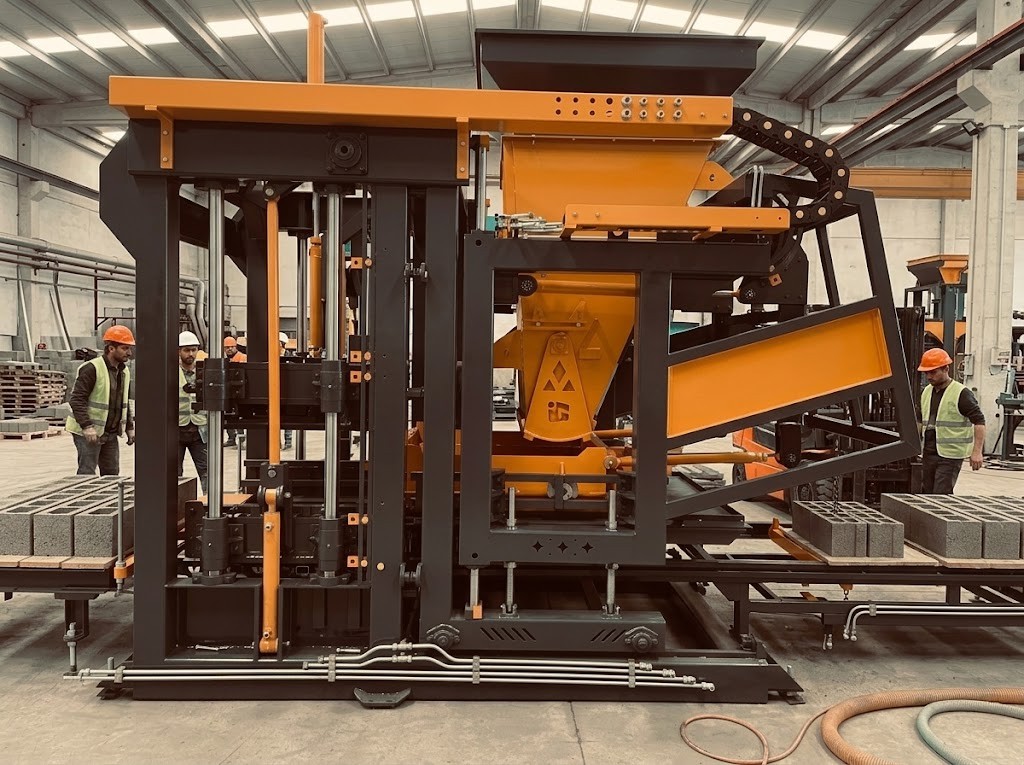
Capacity differences can be seen across the Noval Makine product range. The NBM 3012 model can produce 4 standard concrete blocks or 12 interlocking paving stones per cycle, while the NBM 7042 can be configured to produce 18 standard concrete blocks or 42 interlocking paving stones in a single press cycle.
The right capacity is not the highest production figure, but the capacity that can sustainably meet the actual production target of the plant.
Product variety should also be included in the same evaluation. If the plant is expected to manufacture paving stones, concrete blocks, masonry units, or other concrete products, the machine’s compatibility with mold changes and different product formats should be checked at the planning stage.
2. Automation Level and Production Line Structure
The level of automation is one of the main factors that determines operator requirements, production flow, and how equipment within the plant works together. Since concrete paver and block machines can be configured with different automation levels, the existing workforce, production targets, and future capacity plans of the plant should be taken into account.
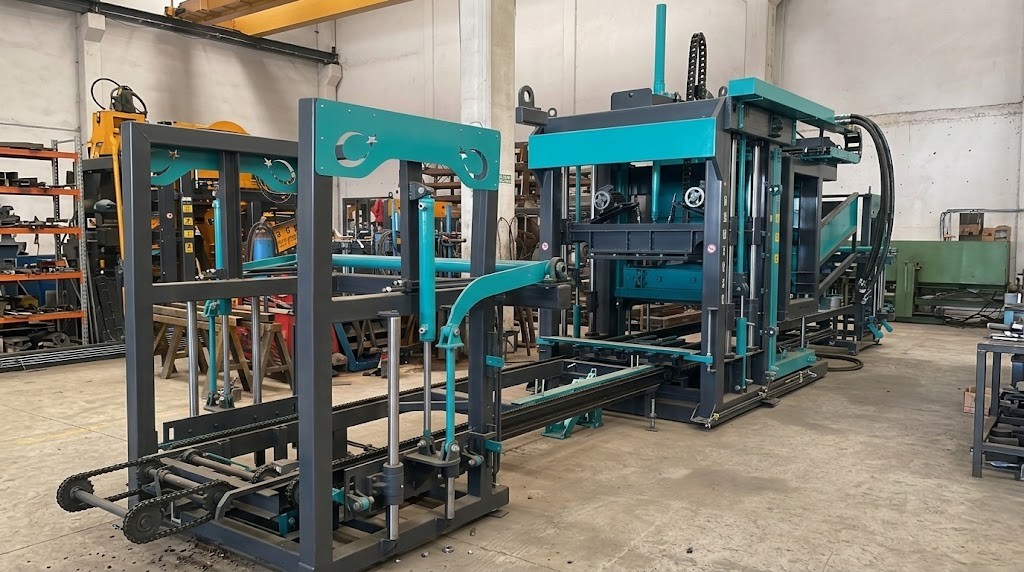
Noval Makine’s product range includes both semi-automatic and automatic concrete paver and block machine solutions. Models such as the NBM 5030 can also be used as standalone machines or configured for integration into an automatic production line.
The main objective when selecting an automation level is to align material movement and operator involvement with the operational targets of the plant.
The machine’s connection with mixers, conveyors, pallet systems, product handling equipment, and stacking processes should also be examined. This allows the operating structure of the entire production line to be evaluated rather than focusing only on the press machine.
3. Vibration, Pressing, and Mold Compatibility
The vibration and pressing system plays a significant role in maintaining consistent concrete product quality. Uniform compaction of the concrete mix inside the mold is important for product geometry, surface appearance, and production repeatability.
Noval Makine’s NBM 7042 model is equipped with a hydraulic system operating within a pressure range of 120–140 bar, while the NBM 3012 operates within a range of 120–200 bar. This difference demonstrates why machine selection should not be based solely on production capacity figures.
Mold flexibility should also be considered. The dimensions, shape, and mold layout of the concrete product being manufactured can change the production characteristics of the machine.
The machine, mold, and vibration system should be evaluated as interconnected parts of the same production cycle rather than as separate components.
Especially in plants where multiple product types will be manufactured, mold change procedures, compatible pallet dimensions, and adjustment requirements should be determined before the machine is selected.
4. Plant Space and Production Flow
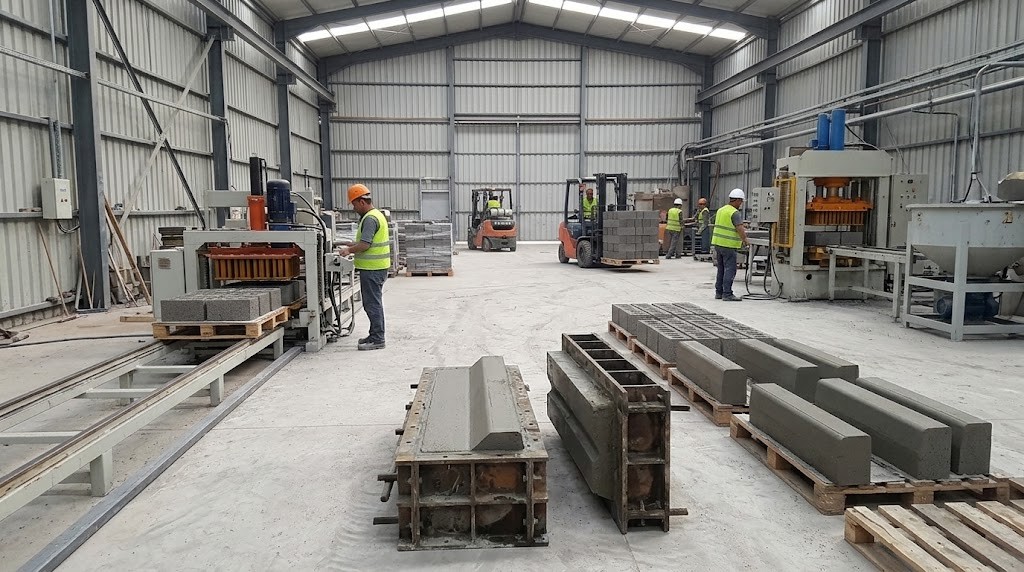
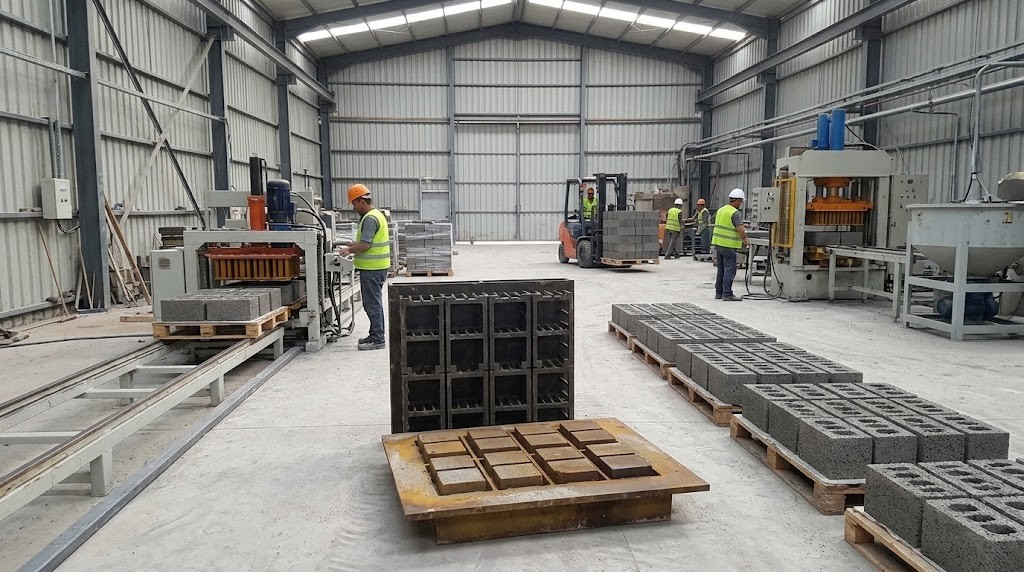
The position of the machine within the plant directly affects the efficiency of concrete paver and block production. Having sufficient space for the machine alone is not enough. Raw material feeding, empty pallet circulation, fresh product handling, curing, and storage areas should all be included in the production plan.
For the NBM 5025 and NBM 5030 models, Noval Makine recommends a minimum enclosed area of 600 m² to accommodate the machine, empty pallet storage, and fresh product curing areas.
Concrete paver and block machine selection should begin with the complete production flow, from raw material entry to the storage of finished products, rather than only with the location of the machine.
Plant planning should also take into account forklift routes, movement areas for other handling equipment, operator access, maintenance points, and product dispatch routes. For this reason, it is beneficial to evaluate the layout plan together with the manufacturer before finalizing the machine model.
5. Technical Support, Spare Parts, and Manufacturer Reliability
A concrete paver and block machine is an industrial system designed for long-term production. Therefore, when selecting a manufacturer, the evaluation should include not only the machine itself but also the technical support and spare parts infrastructure available throughout its operating life.
In addition to concrete paver and block machines, Noval Makine offers solutions involving production pallets, concrete batching plants, crushing and screening plants, equipment, and spare parts. Its product portfolio includes different concrete paver and block machine models such as the NBM 7042, NBM 6036, NBM 5030, NBM 5025, and NBM 4020.
Reliability in machine selection covers not only the performance of the system during initial commissioning but also the accessibility of technical support throughout continuous production.
Before purchase, maintenance requirements, spare parts availability, operator guidance, and the technical communication process should be clearly evaluated.
Machine Selection Decision Table
|
Evaluation Criterion |
Point to Check |
Impact on Production |
|
Production capacity |
Products per cycle and target output |
Production volume |
|
Product variety |
Mold and product options |
Production flexibility |
|
Automation |
Line integration and operator requirements |
Process management |
|
Plant compatibility |
Space, pallet, and handling layout |
Production flow |
|
Technical support |
Service and spare parts availability |
Production continuity |
The most suitable concrete paver and block machine is the system that can meet the plant’s production target, product variety, available space, and automation expectations together. When evaluating Noval Makine product options, comparing models based on these technical criteria can make it easier to determine a production line that is more closely aligned with the requirements of the facility.