



NBM 5025 Efficient Block and Paving Stone Production
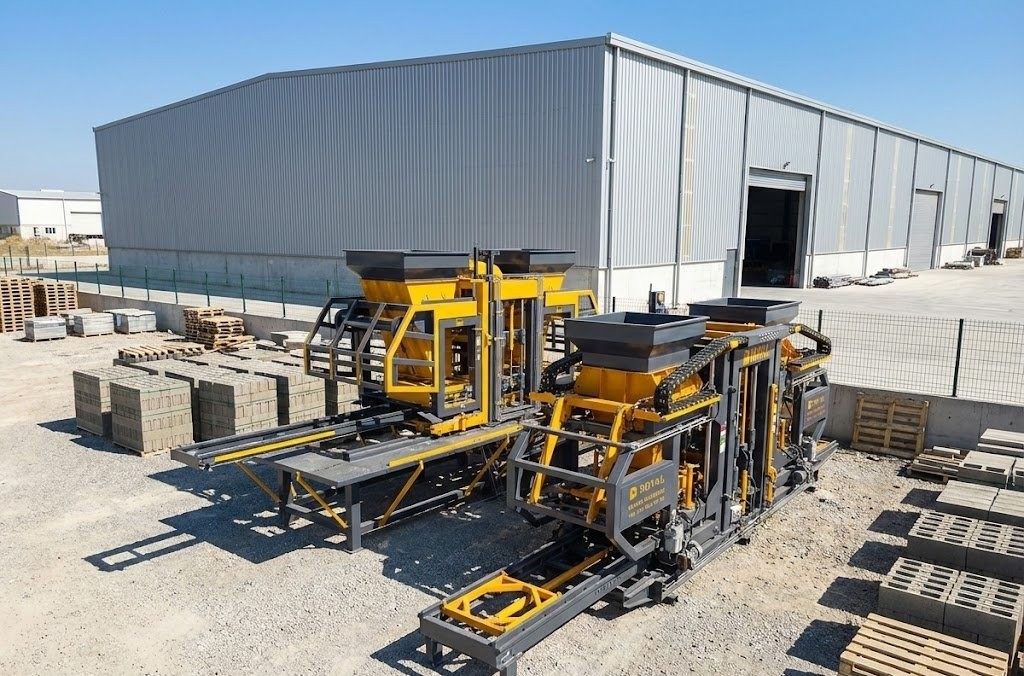
NBM 5025 is an advanced machine in the compact vibro press class that delivers high efficiency in block and paving stone production by combining high pressing force with vibration technology to increase both product strength and production speed. Its main advantage lies in the synchronized operation of the pressing power and vibro system, which ensures repeatable quality across different product groups such as blocks and paving stones. Homogeneous compaction of the concrete inside the mold enables the required strength levels for these products to be consistently achieved. Production data shows that advanced vibro presses in this segment can reduce cycle times by an average of up to 15%.
The compact body structure of the NBM 5025 distributes mechanical loads generated during pressing evenly, allowing vibration performance to be transmitted to the mold without loss. This configuration extends mold life and increases stability throughout the production process. One of the most common issues in structural products such as paving stones and concrete blocks is dimensional deviation. The stable frame and optimized hydraulic system of the NBM 5025 minimize these deviations and provide dimensional consistency in every batch produced.
What Is the Impact of Compact Design on Block and Paving Stone Production?
Compact design enables efficient use of production space and allows the mechanical components inside the machine to operate in a more balanced manner. Thanks to its compact body, the NBM 5025 occupies less floor space and offers flexibility in plant layout. To explain this directly: compact design reduces energy losses in the production process, focuses vibration intensity on the right points and optimizes cycle times, thereby increasing efficiency.
Compact presses occupy approximately 20% less space compared with conventional wide-frame models. This ratio provides a significant advantage especially for small and medium-sized facilities. In addition, compact design makes it easier to access maintenance points on the machine, contributing to reduced downtime. As a result, production planning can be carried out in a more continuous and predictable way.
Key Components of the Compact Design
-
Vibration-absorbing frame structure
-
Optimized center of gravity
-
High-strength steel construction
-
Quick connection elements
-
Motor and hydraulic modules suitable for confined spaces
The combined operation of these components enables the NBM 5025 to deliver stable performance even under high-tonnage pressing conditions.
Why Does Vibration Technology Play a Critical Role in Block and Paving Stone Production?
Vibration technology is one of the most important factors determining product quality, as it ensures that the concrete mix is placed inside the mold at the ideal density. The clear answer is: high-frequency vibration increases the strength of blocks and paving stones, improves surface quality and accelerates the production process.
For products such as concrete blocks and paving stones, internal density must be homogeneous. The vibration system of the NBM 5025 operates in the 3800–4500 rpm range, ensuring that aggregates are ideally positioned and micro-voids are eliminated. This translates into directly measurable results in strength tests. The compressive strength of densely compacted concrete can increase by around 10–15%.
Advantages of Vibration Technology
-
Higher strength through homogeneous compaction
-
Shorter pressing and compaction time
-
Products with sharp, well-defined surface lines
-
Consistent material distribution inside the mold
-
Less adjustment required during recipe changes
In block production, corner strength is particularly critical. In paving stones, surface smoothness and thickness consistency come to the forefront. The vibration module of the NBM 5025 provides the precision necessary to meet these different technical requirements.
Technical Structure of the Vibration System
Eccentric Weight Mechanism
It generates vibration intensity through rotational speeds and allows the operator to control vibration via frequency adjustments.
Synchronous Vibration Control
The module operates in parallel with the pressing cycle, ensuring that the upper and lower layers of the concrete achieve the same level of compaction.
What Production Advantages Does the Power Transmission System of NBM 5025 Provide?
The power transmission system ensures that pressing force is transferred to the mold in a stable way during block and paving stone production. Put simply: the power transmission system makes it possible to achieve the same quality in every cycle thanks to hydraulic pressure stability and high torque generation.
For press force to be transmitted without loss, the motor, hydraulic pump and valve configurations must work in harmony. When pressure loss in the hydraulic system is kept below approximately 3%, deviations in thickness and dimensions of the products are minimized. This is especially critical for large-format blocks.
Technical Components of the Power Transmission System
-
High-torque motor group
-
Hydraulic power unit
-
Pressure balancing valves
-
Press cylinder system
-
Torque compensation modules
The stability of this system ensures high-accuracy results from the machine even under intense production loads.
How Does Mold Technology Affect Block and Paving Stone Production?
Mold technology is a fundamental factor determining both product variety and production accuracy in block and paving stone manufacturing. Put directly: as mold precision increases, product quality rises, scrap rates fall and efficiency improves.
Molds manufactured from heat-treated steel are resistant to high pressure and long-term vibration. Maintaining dimensional stability of the molds ensures consistent surface quality. In paving stone production, pattern clarity is directly linked to the surface characteristics of the mold.
Advancements in mold technology also make it easier for manufacturers to offer custom designs tailored to customer requirements.
How Does Production Cycle Time Affect Block and Paving Stone Performance?
Cycle time is the period from the start of a pressing cycle to the moment the product is removed from the mold and is highly important for efficiency. The clear answer is: as cycle time decreases, production capacity increases and stock planning becomes more predictable.
In modern vibro press systems like the NBM 5025, cycle times can vary between 12 and 18 seconds. This creates a significant difference in annual production capacity. For example, a 2-second improvement in cycle time can mean hundreds more products per shift.
Factors That Reduce Cycle Time
-
Fast filling unit
-
Optimized hydraulic flow
-
Precise vibration synchronization
-
Stable pressing pressure
-
Short mold change times
A smooth production flow also provides major advantages in workforce planning.
How Do Automation Systems Provide Advantages in Block and Paving Stone Production?
Automation reduces human error in production and makes processes repeatable. To explain this directly: the automation system continuously monitors production parameters and maintains product quality at a consistent level.
PLC-based control systems manage critical variables such as press pressure, vibration level and mold fill rate in real time. Modern automation infrastructure can reduce operator-related errors by up to 40%.
Core Components of Automation
-
Recipe management module
-
Sensor-based analysis system
-
Pressure and vibration control units
-
Fault detection system
-
Operator interface panel
This structure keeps out-of-tolerance results to a minimum during production.
Why Is Energy Efficiency Important in Block and Paving Stone Production?
Because energy costs account for a significant portion of plant expenses, energy efficiency is critically important. The clear answer: energy efficiency directly reduces operating costs and increases long-term production sustainability.
With its high-efficiency motors and optimized hydraulic system, the NBM 5025 is designed to reduce energy consumption. Energy-saving presses can deliver up to 10% reductions in annual operating costs.
Elements That Provide Energy Savings
-
High-efficiency motor class
-
Low-friction hydraulic lines
-
Variable speed drives
-
Optimized vibration cycle
Energy savings reduce not only costs but also environmental impact.
Why Is Ease of Maintenance a Critical Factor for Production Continuity?
Fast and effective maintenance processes reduce downtime. The short answer is: ease of maintenance increases production continuity and enhances efficiency by lowering failure risk.
In vibro presses that undergo regular maintenance, failure rates decrease significantly. Easy access to maintenance points is one of the standout features of the NBM 5025.
Basic Maintenance Steps
-
Checking hydraulic oil and pressure
-
Inspecting vibration bearings
-
Reviewing electrical connections
-
Cleaning mold surfaces
-
Performing sensor calibration
These steps ensure uninterrupted operation of production lines.
How Does Block and Paving Stone Product Quality Affect Efficiency?
As product quality increases, scrap rates decrease and production efficiency rises. Put directly: high quality eliminates the need for rework, accelerates production and reduces costs.
In blocks and paving stones, strength, dimensional consistency and surface clarity are the main criteria defining quality. The synchronization of vibration and pressing in the NBM 5025 meets these criteria at an optimum level.
Factors Affecting Product Quality
-
Concrete compaction density
-
Mold surface precision
-
Stability of pressing pressure
-
Compatibility of the mix recipe
-
Accuracy of operator settings
A high quality standard strengthens the manufacturer’s competitive position in the market.
With its advanced vibro press technology, optimized power transmission system, precise vibration module and modern automation solutions, the NBM 5025 offers a highly efficient solution for block and paving stone production. Thanks to the harmonious interaction of all its components, the machine delivers sustainable quality and high performance across different production types, providing a major advantage in both capacity growth and long-term operational efficiency.