



NBM 5025 Compact Vibro Press Power Precision and Production Efficiency
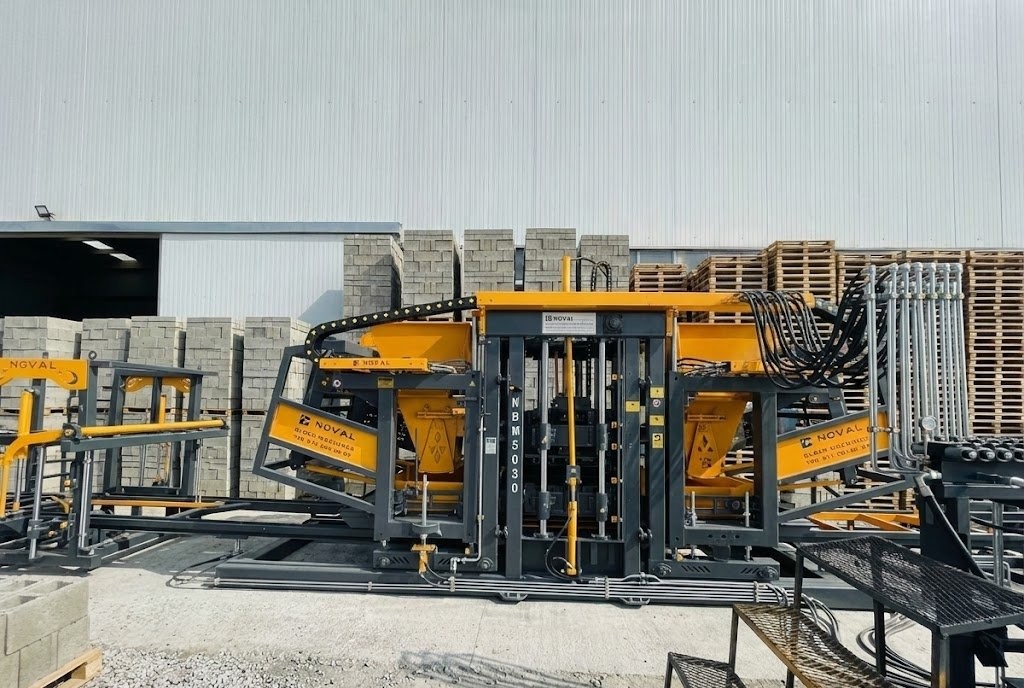
NBM 5025 compact vibro press is an advanced pressing system that increases production efficiency in the manufacturing of concrete blocks, paving stones and industrial structural elements by delivering high pressing force and vibration performance. With its compact body structure, optimized power transmission and high-precision production cycle, this machine stabilizes production quality in plants of different scales. It is preferred in the field because it combines short cycle times with high capacity while keeping operator error margin low.
The operating principle of the NBM 5025 synchronizes mechanical pressing force with high-frequency vibro technology to ensure homogeneous compaction of concrete. This method can generate an average increase of around 10–15% in material strength. At the same time, it offers ease of transition between molds, providing flexibility in production planning. Efficiency analyses carried out in industrial plants show that compact vibro press models can offer up to 8% energy savings compared with conventional hydraulic presses in the same segment.
How Does NBM 5025 Deliver High Performance in a Compact Structure?
The compact body design ensures that the total mass of the machine remains stable during vibration, and this stability allows the pressing force to be transmitted to the mold in an optimal way. For this reason, despite its high-tonnage pressing force, the NBM 5025 exhibits a durable structure with minimal frame deformation for long-term use.
In addition, the compact design enables more efficient use of production space. Layout optimizations conducted in plants with an area of 1000–1500 m² show that compact vibro presses occupy about 20% less floor space compared with conventional wide-body presses. This creates a cost advantage in investment processes such as plant installation or modification.
Key Components of the Compact Design
-
Rigid steel construction frame
-
Vibration-absorbing elastomer elements
-
Optimized weight distribution
-
Motor configuration that delivers high torque in a small footprint
-
Bearings and connection systems resistant to mechanical loads
The synchronized operation of these components enables a compact press to deliver high durability even in the heavy-duty class.
How Does the Vibration Technology of NBM 5025 Improve Production?
The vibro technology of the NBM 5025 ensures homogeneous compaction of the concrete mix inside the mold, thereby increasing surface quality and product strength. To answer the question directly: the high-frequency vibration system enables void-free compaction of the concrete, which creates a distinct improvement in product quality.
The vibration frequency used in vibro presses typically operates in the range of 3800–4500 rpm. This range is optimal for the ideal placement of concrete aggregates. The more consistent the vibration intensity, the lower the dimensional deviation during production. According to industrial measurements, machines equipped with high-precision vibro technology can reduce dimensional tolerances down to ±1 mm.
Advantages of Vibration Technology
-
Higher compressive strength thanks to reduced void ratio
-
Homogeneous material distribution inside the mold
-
Smooth product surfaces with sharp edges
-
Increased cycle performance with shorter pressing times
-
Less adjustment required during recipe changes
Vibration performance is one of the main factors determining surface quality, especially in paving stone and kerb production. Therefore, advanced vibro presses such as the NBM 5025 are widely preferred by urban furniture and landscaping product manufacturers.
Technical Structure of the Vibration Mechanism
Eccentric Weight System
The vibration system of the NBM 5025 generally operates through rotating mechanisms with eccentric weights. This system allows the operator to control the direction and intensity of the vibration force.
Vibration Modulation
By using high acceleration at the beginning and lower acceleration at the end, the compaction curve of the concrete is optimized. In this way, mold life is extended and the risk of concrete segregation is reduced.
Which Technical Details Are Prominent in the Power Transmission System of NBM 5025?
The power transmission system of the NBM 5025 is designed to ensure loss-free transfer of pressing force and synchronized operation of the vibration mechanism. To give a quick answer: the power transmission system safely generates maximum pressing force through the coordinated operation of high-torque motors and hydraulic control units.
Pressing power is produced by the mechanical drive system and hydraulic pressure units. The stability of these units’ performance is critical for dimensional accuracy in production. Data show that in machines where hydraulic pressure loss exceeds around 3%, thickness tolerances can double.
Components of the Power Transmission System
-
High-torque electric motor
-
Hydraulic pump and power unit
-
Pressure balancing valve system
-
Press cylinder group
-
Torque compensation mechanisms
Thanks to this configuration, the NBM 5025 can maintain a stable pressing cycle even under intense production conditions.
How Does NBM 5025 Increase Production Efficiency?
The NBM 5025 compact vibro press increases production efficiency through fast cycle times, low downtime and high product consistency. Short production cycles enable more products to be manufactured in a single shift while reducing the error rate.
Industrial reports indicate that machines such as the NBM 5025, which belong to the compact vibro press class, achieve on average 12–18% higher output per shift compared with older generation presses in the same segment. This difference directly affects annual production capacity, especially in large-scale concrete element factories.
Key Factors That Increase Efficiency
-
Fast mold change system
-
Low failure rate
-
Optimized hydraulic cycle
-
Reduced energy costs
-
Less scrap thanks to homogeneous product quality
The combination of these factors positively influences both the operational and financial performance of plants.
Why Are Mold Compatibility and Flexible Production Capability Important?
Mold compatibility is one of the strongest aspects of the NBM 5025 because it allows production with different mold designs. To answer directly, mold compatibility increases production flexibility and enables plants to expand their product range.
The shorter the mold change time of a vibro press machine, the more agile the production line becomes. It is known that mold change times in modern presses can be reduced to the level of 20–30 minutes. Flexible production capability offers a strategic advantage especially in the following areas:
-
Urban paving products
-
Kerb and channel elements
-
Industrial concrete blocks
-
Landscaping materials
This diversity makes it easier for manufacturers to quickly adapt to changing market demands.
Technical Details of Mold Technology
Molds are manufactured from heat-treated steels with high wear resistance. This structure provides dimensional stability even beyond one million production cycles. Tight mold tolerances play a decisive role in maintaining product surface quality.
Single Table (Mold Types and Application Areas)
|
Mold Type |
Application Area |
Technical Feature |
|
Paving Stone Mold |
Urban ground covering |
Fine detailed edges and high compressive strength |
|
Kerb Mold |
Road and pavement edge elements |
Deep section providing high load-bearing capacity |
|
Block Mold |
Industrial wall elements |
Homogeneous compaction and high strength |
|
Special Shape Mold |
Landscaping and decorative products |
Structure compatible with different geometries |
Why Do the Automation and Control Systems of NBM 5025 Play a Critical Role?
The higher the level of automation in modern vibro presses, the greater the production accuracy and repeatability. The control panel of the NBM 5025 enables the operator to precisely adjust mix recipes, press cycles and vibration parameters. In short, automation is critical for process consistency and production quality.
PLC-based control systems process sensor data in real time, ensuring that every cycle of the machine delivers the same quality standard. Production statistics indicate that increasing the automation level can reduce operator-related error rates by up to 40%.
Main Functions of the Control Systems
-
Monitoring press pressure
-
Adjusting vibration frequency
-
Analyzing mold fill level
-
Recording production logs
-
Fault diagnosis and early warning system
These functions offer a significant advantage for uninterrupted production, especially in high-capacity plants.
Impact of Sensor Integration
Thanks to components such as motion sensors, temperature analyzers and hydraulic pressure sensors, the machine can optimize its own operating parameters in real time. This approach both increases energy efficiency and extends machine life.
How Are Energy Efficiency and Cost Advantages Achieved?
Energy consumption accounts for approximately 25–30% of total operating costs in concrete production plants. The motor efficiency of the NBM 5025 and its optimized vibration cycle are designed to minimize energy consumption. Therefore, in high-capacity plants, annual energy expenses can be reduced by up to 10%.
Energy efficiency is not only a cost advantage but also important from the perspective of sustainable production. Reduced electricity consumption contributes to lowering the carbon footprint.
Structural Features That Provide Energy Savings
-
High-efficiency motor class
-
Optimized power usage with variable frequency drive (VFD)
-
Low-friction hydraulic system
-
Automatic modulation of the vibration cycle
When these features are combined, high performance is achieved in both economic and environmental terms.
How Does NBM 5025 Support Production Continuity with Ease of Maintenance?
The maintenance processes of the machine are critical for production continuity. The NBM 5025 provides quick intervention options for the operator thanks to the easy accessibility of components requiring maintenance. The answer is: ease of maintenance reduces downtime and increases overall efficiency.
It is known that when regular maintenance is applied, failure rates in machines can drop by up to 50%. In addition, periodic lubrication significantly extends the life of the vibration system.
Periodic Maintenance Steps
-
Checking hydraulic oil level
-
Inspecting vibration bearings
-
Tightness check of electrical panel connections
-
Cleaning and deformation control of mold surfaces
-
Sensor calibration measurements
These steps ensure that production quality remains stable.
How Is a High-Level Standard in Product Quality Achieved with NBM 5025?
The main factors that determine product quality are compaction homogeneity, pressing force and mold precision. The NBM 5025 combines these three factors at an optimum level, enabling the production of high-strength products. To explain directly: thanks to the synchronization of the machine’s vibration and pressing force, products exhibit dimensional and structural stability.
Performance measurements show that paving stones produced with advanced vibro press machines can reach compressive strength levels of 450–550 kg/cm². These values comply with the quality standards required in urban infrastructure projects.
Factors Affecting Product Quality
-
Mold surface roughness
-
Control of the concrete mix recipe
-
Pressing and vibration cycle
-
Operator adjustment precision
-
Stability of hydraulic pressure
Proper management of these factors allows manufacturers to stand out in market competition.
As machine technology evolves, the role of compact vibro presses in the industry is becoming increasingly important. The power-, precision- and efficiency-focused structure of the NBM 5025 elevates both production quality and operational performance. This configuration offers a robust and sustainable solution for manufacturers planning long-term investments.