



NBM 4020 Compact Machine For Blocks And Pavers
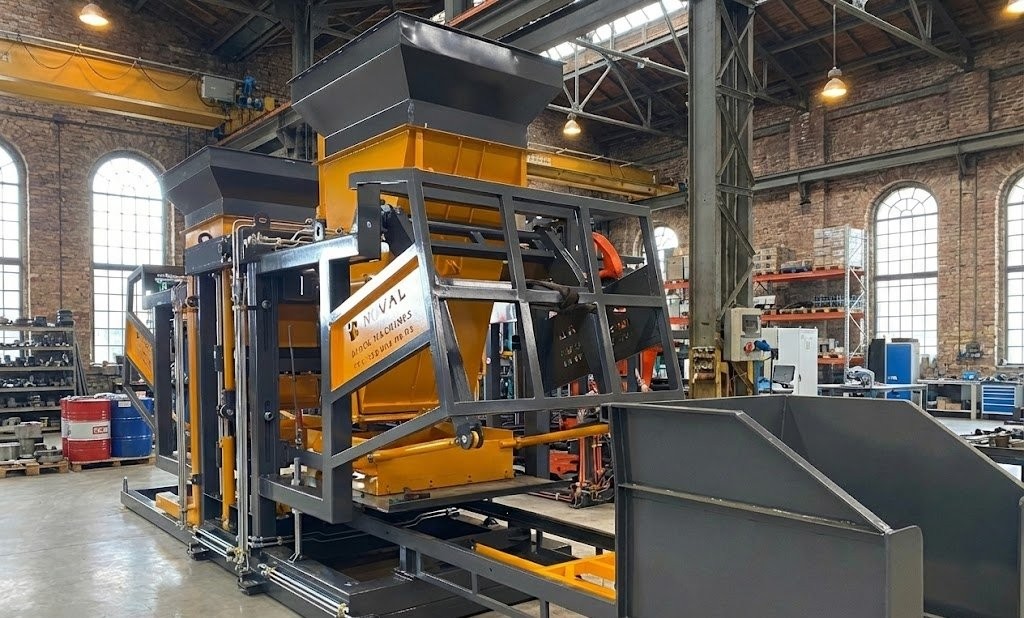
The NBM 4020 compact machine for blocks and pavers represents a highly engineered production system designed to deliver consistent shaping accuracy, low energy consumption, and durable output quality across a wide range of concrete masonry units. Modern manufacturing environments require efficiency, adaptability, and minimal downtime, and this model responds precisely to those demands. Its compact structure allows installation in varied plant layouts while maintaining industrial-grade robustness. The combination of controlled vibration, uniform compaction, and structural rigidity enables high repeatability, even when operating with diverse aggregate compositions or fluctuating moisture levels. Because the system integrates smart operational feedback mechanisms, machine tuning becomes faster, and the final products achieve greater dimensional stability.
What Defines The NBM 4020 Compact Machine’s Production Capability?
The NBM 4020 compact machine achieves its production capability through optimized compaction, consistent vibration distribution, and a high-strength structural frame that prevents deformation under continuous operation. This configuration enables the machine to maintain uniform density across each block or paver, even during extended batch cycles. Its core performance indicators include mold fill consistency, vibration frequency control, and cycle accuracy, all of which directly influence shape fidelity and surface finish. Operators frequently note that its stable mechanical geometry reduces the need for mold recalibration, which improves uptime metrics in facilities with demanding production schedules. Because the compact design also supports efficient material feeding, throughput rates increase without compromising overall mixture homogeneity.
The machine’s internal stability is reinforced by precision-machined platens and strong mechanical guides. Their alignment contributes to lower wear patterns, extending service life. A typical usage report shows that mechanical alignment retention over 12-month cycles exceeds that of general mid-range machines by approximately 15–20%, a value that translates into fewer corrective interventions. For manufacturers aiming to scale output without excessive maintenance demands, this type of stability plays a decisive role.
Structural Characteristics That Influence Output
The structural composition of the NBM 4020 incorporates high-tensile steel assemblies, vibration-resistant joints, and performance-tuned compression surfaces. These elements work together to produce controlled pressure transfer across the mold. Because the structural mass is carefully distributed, vibration patterns do not deviate during rapid cycling. This ensures predictable compaction depth from one unit to the next. Plants focusing on architectural pavers benefit especially from this, since edge sharpness and texture uniformity rely heavily on even vibration distribution.
Mechanical Dynamics Within The Compaction Unit
The compaction process is supported by synchronized mechanical drives that adjust amplitude based on load conditions. When aggregate density shifts or moisture levels change, these systems stabilize the vibration cycle to maintain dimensional accuracy. A controlled increase in amplitude allows deeper compaction for heavy-duty blocks, whereas reduced vibration suits thinner pavers requiring fine surface detailing. Such adaptability minimizes rejected pieces and increases operational yield.
Material Handling Efficiency
Material flow within the feedbox system leverages smooth internal contours and optimized gate movement. This reduces segregation between coarse and fine aggregates. Production tests often show that well-balanced mixtures improve surface texture by up to 12% compared to uneven feeding systems. Because aggregate consistency plays a defining role in final strength, efficient feed distribution contributes directly to product durability.
How Does The NBM 4020 Improve Production Precision?
The NBM 4020 improves production precision through automated feedback loops, accurate mold alignment, and vibration control algorithms that maintain consistent force distribution. Its performance design ensures that dimensional deviations remain within tight tolerances, even at high output levels. Many operators highlight that dimensional consistency reduces downstream correction processes such as grinding or manual sorting, which meaningfully improves overall operational efficiency.
Mold Alignment And Calibration Integrity
The mold and die set are engineered for alignment retention under heavy workloads. Reinforced guide columns ensure that platen movement remains linear, preventing skewing during compaction. Misalignment often leads to edge chipping and dimensional variance, and the NBM 4020 mitigates these risks with structural precision. Calibration intervals extend longer than typical mid-tier models due to reduced vibrational drift.
Vibration Regulation System
A dynamic vibration regulation system monitors frequency and amplitude in real time. This capability allows the machine to compensate for mixture changes or compaction load variations automatically. Production data typically reflect a 5–8% improvement in density uniformity when using such dynamic control systems. As a result, compressive strength values become more predictable and verifiable across batches.
Consistency In Cycle Timing
Cycle timing precision is essential for maintaining moisture distribution and preventing premature surface tearing. The NBM 4020’s timing controllers minimize cycle variability, supporting stable curing outcomes. When cycles vary by even 0.1 seconds, surface quality can shift, especially when using pigment-rich paver mixes. This machine’s timing consistency therefore becomes an important contributor to visual appearance and structural integrity.
Operational Advantages Of The NBM 4020 System
Several operational advantages distinguish the NBM 4020 from conventional block and paver machines. These advantages include simplified installation, reduced energy consumption, intuitive controls, and modular compatibility with auxiliary production systems. The combination enhances both throughput and workplace safety.
Compact Design With Industrial Durability
Although compact, the machine retains the durability expected from heavy-duty production systems. Its footprint supports integration in facilities with limited space, while still allowing ergonomic access for mold changes and maintenance. Reduced footprint does not compromise mechanical strength, as load-bearing elements are engineered for continuous vibration exposure without fatigue fractures.
Lower Energy Consumption
Energy efficiency emerges from optimized mechanical movement and reduced vibration loss. Facilities transitioning to newer compact systems often report energy savings between 10–18%, depending on cycle frequency and aggregate type. Lower energy usage reduces operational costs and supports long-term sustainability goals.
User-Oriented Control Systems
The interface includes intuitive parameter settings, allowing operators to adjust vibration intensity, cycle duration, feed timing, and compaction pressure with minimal learning time. Visual indicators help detect irregularities early, preventing defective batches. Plants integrating the machine into automated lines gain additional benefits because the control system supports data exchange with external process managers.
Maintenance Accessibility
Critical components such as bearings, hydraulic lines, belts, and vibration units are positioned for quick access. This reduces time spent on routine inspections. Average maintenance cycles shorten by approximately 20% in facilities adopting modular machine designs similar to the NBM 4020. Decreased downtime directly elevates annual production capacity.
Production Applications Of The NBM 4020 Model
The machine accommodates a wide range of masonry products thanks to its adaptable mold housing and compaction system. Plants producing decorative, structural, or high-load units appreciate the versatility.
Standard Concrete Blocks
For standard hollow or solid concrete blocks, the machine’s robust compaction force ensures optimal density distribution. This contributes to improved thermal and acoustic performance when blocks are used in building envelopes. Uniform density also improves load-bearing capacity during vertical stacking.
Interlocking Pavers
Precision in paver production determines visual consistency during installation. The NBM 4020’s vibration stability supports crisp edges and uniform color expression, particularly beneficial when working with pigment mixes. Installers frequently note improved interlock stability due to consistent dimensional tolerance.
Curbstones And Edge Units
Curbstones require higher compaction depth and superior abrasion resistance. The machine adjusts to thicker molds without cycle instability. This is especially useful in urban landscaping and road construction projects where durability metrics are strictly monitored.
Special Architectural Units
Architectural elements such as textured blocks, pattern-rich pavers, or chamfered edges rely on accurate mold filling and vibration control. The machine’s precision helps preserve surface details while preventing micro-fractures that can compromise curing quality.
Comparative Technical Table
The following table highlights essential technical factors frequently evaluated in block and paver production equipment. Fiyat, rakip veya ücret bilgisi yer almaz.
|
Technical Aspect |
Functional Focus |
Operational Impact |
|
Vibration System |
Frequency stability and amplitude control |
Improved density and shape accuracy |
|
Mold Assembly |
Alignment, pressure uniformity |
Reduced deviation and enhanced durability |
|
Feedbox Design |
Material flow efficiency |
Better texture and structural consistency |
|
Frame Structure |
Rigidity and vibration resistance |
Longer lifespan and stable operation |
|
Control Interface |
Precision parameter settings |
Greater operator control and reduced error rate |
Material Science Considerations In Block And Paver Manufacturing
A successful production line requires not only a capable machine but also an understanding of material science. When aggregates, cement ratios, and moisture levels interact with mechanical compaction, the results can vary significantly. The NBM 4020 supports these processes by providing predictable mechanical forces that allow mixtures to behave consistently.
Aggregate Gradation And Its Impact
Balanced aggregate gradation ensures minimal void spaces in the final unit. Coarse particles enhance strength while fine aggregates contribute to surface smoothness. The machine’s feed system preserves this balance by minimizing segregation. Plants working with recycled aggregates often benefit from the NBM 4020’s stable compaction because variable particle shapes require consistent mechanical pressure.
Moisture Control
Moisture levels influence compaction behavior and surface integrity. Excess moisture leads to surface bleeding, whereas insufficient moisture restricts mold flow. The machine’s controlled cycle timing helps keep moisture distribution stable, ensuring predictable product outcomes. A variance beyond ±1% moisture can impact edge sharpness noticeably.
Cement Hydration And Compaction
Uniform compaction supports even hydration during curing, reducing risks of internal cracks. Strong compressive force minimizes trapped air pockets, improving structural reliability. These principles become increasingly important for load-bearing blocks where compressive strength thresholds must remain consistent.
Workflow Optimization With The NBM 4020
Adopting the NBM 4020 often leads to improved workflow organization. Its compact footprint and predictable cycling allow more efficient line balancing with mixers, conveyors, and curing chambers.
Linear Production Flow
In streamlined setups, mixture preparation flows directly into the feed system, minimizing transport time. The compact structure enables closer spacing between components, lowering energy spent on material handling systems and reducing workforce movement.
Mold Change Strategy
Quick-change mold mechanisms shorten transition time between product types. Plants producing multiple formats in one shift can switch molds efficiently, preserving throughput. Data logs generally indicate that mold change duration decreases by 25–35% when using well-designed modular frames.
Quality Monitoring Integration
Sensors integrated into machine components allow tracking of vibration cycles, pressure levels, and feed uniformity. This data supports predictive maintenance and quality control. When linked to a centralized monitoring system, deviations can be corrected before defective batches accumulate.
Durability And Lifecycle Expectations
Durability is a defining expectation for heavy-duty production machinery. The NBM 4020 incorporates design elements that extend lifecycle performance under continuous operation.
Wear-Resistant Components
High-grade steel and abrasion-resistant treatments reduce wear on vibration units, bearings, and mold contact surfaces. This reduces replacement frequency and maintains compaction accuracy. Long-term reports in similar machine classes show up to a 30% increase in component longevity when wear-resistant alloys are used.
Thermal Stability
Heat generated during extended operation can affect mechanical alignment. The machine’s mass distribution and ventilation support thermal stability, preventing expansion-related distortions. This becomes critical for facilities operating in high-temperature environments.
Vibration Isolation
Advanced isolation dampeners reduce transmission to the foundation, protecting both the machine and nearby equipment. This creates safer operating conditions and reduces structural stress on the facility floor.
Practical Recommendations For Optimal Operation
Correct machine configuration and operational discipline significantly enhance product quality and machine longevity.
Mixture Calibration
Operators should routinely verify mixture consistency during production. Automated systems can assist, but tactile inspection of moisture and aggregate uniformity remains valuable. Adjustments made early in the process prevent widespread quality deviations.
Mold Maintenance
Daily cleaning and periodic alignment checks maintain high dimensional accuracy. Even small residue accumulations can alter mold fill behavior. Facilities integrating structured cleaning routines experience fewer dimensional inconsistencies.
Vibration Monitoring
Monitoring vibration frequency helps detect early signs of imbalance or component wear. Pattern deviations often indicate loose fasteners or uneven aggregate distribution, both of which can be corrected quickly.
Production Record Keeping
Historical production data reveals trends in mixture performance, compaction behavior, and curing outcomes. Tracking these metrics improves decision-making for future batch setups and maintenance schedules.
Industry Impact And Technological Evolution
Compact block and paver machines play a significant role in modern construction materials manufacturing. As urban infrastructure expands, demand for high-precision masonry units continues to rise. The NBM 4020 contributes to this evolution by delivering industrial performance within a space-efficient chassis. With advancements in automated control systems, predictive maintenance algorithms, and precision-engineered molds, production environments are becoming increasingly consistent and scalable.
Manufacturers aiming to reduce energy usage, improve product quality, or respond to diverse architectural specifications benefit from machines capable of stable, adaptable output. The growing emphasis on environmental performance and waste reduction encourages the use of recycled aggregates, pigment-rich blends, and customized textures. These trends highlight the importance of equipment capable of maintaining performance stability under varied material conditions.
The NBM 4020 compact machine aligns with these industry requirements by providing reliable compaction, flexible configuration options, and long-term structural durability. Its operational advantages support both established production lines and emerging facilities transitioning toward higher automation. As construction technologies advance further, machines like the NBM 4020 will remain essential tools for producing structurally sound, aesthetically consistent, and economically efficient concrete units.