


How Does Production Pallet Selection Affect Concrete Product Quality?
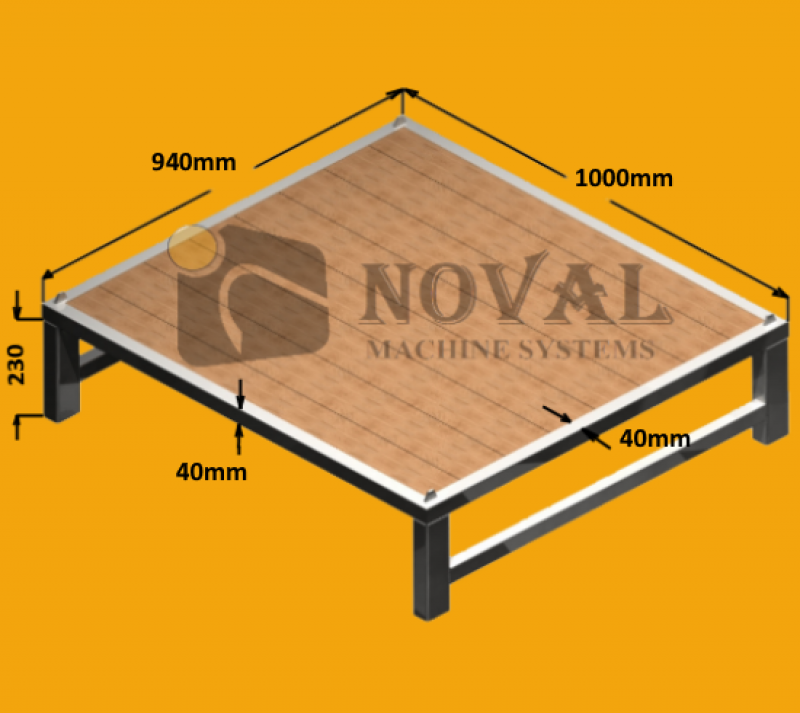
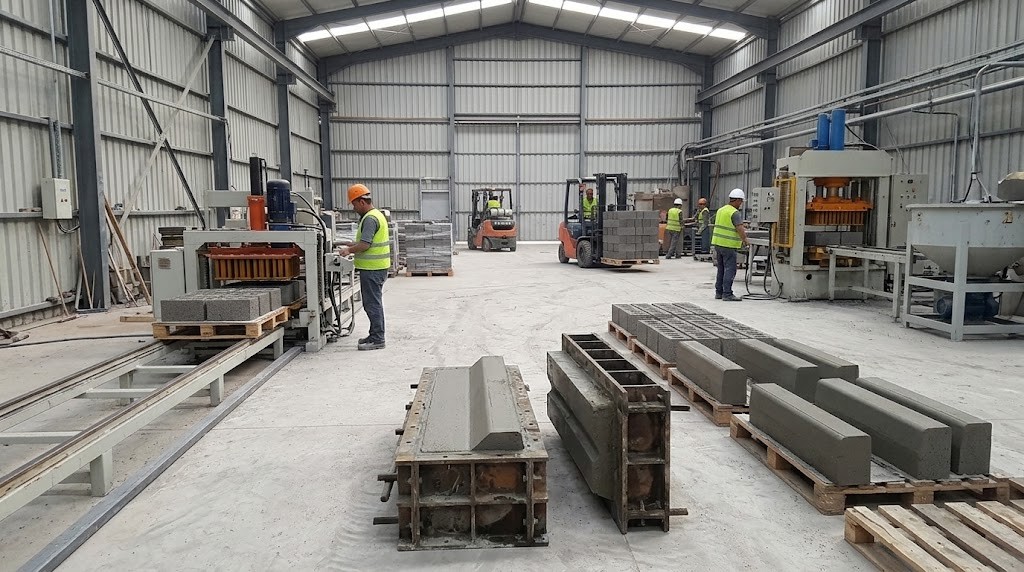
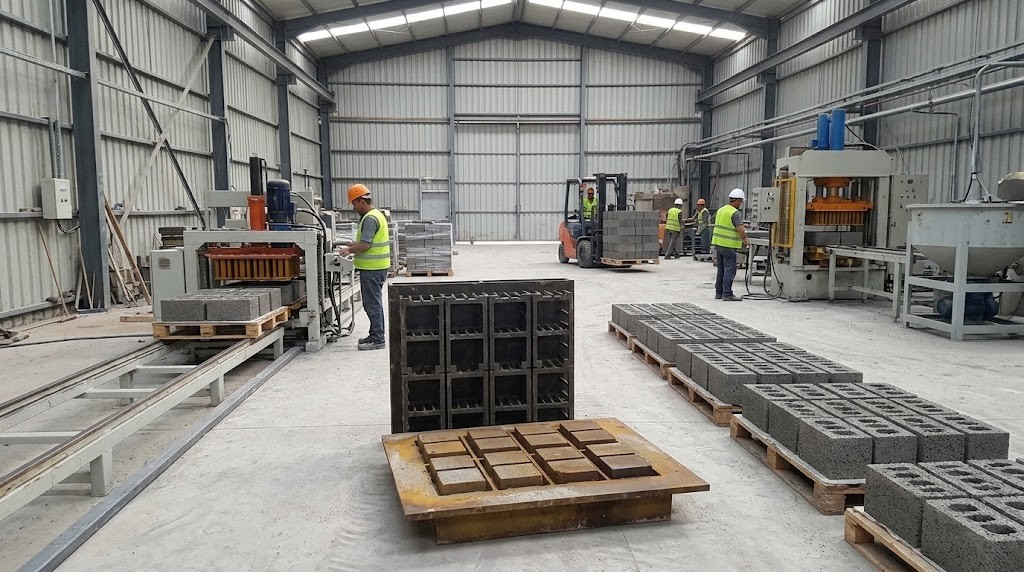
Production pallet selection is one of the manufacturing parameters that directly affects the quality of concrete products. In products such as concrete paving stones, concrete blocks, pumice blocks, and similar units, the pallet is not merely a surface that carries the product; it is an active part of the production system operating beneath the mold during pressing and vibration.
The main selection criteria include:
-
Compatibility with machine and mold dimensions
-
Sufficient rigidity and load-bearing capacity
-
A smooth and stable surface structure
-
Suitability for balanced vibration transfer
-
Compatibility with production and conveying systems
The right production pallet helps preserve product geometry, supports more balanced compaction, and enables fresh concrete products to maintain their shape during transportation. Noval Makine also evaluates production pallets together with variables such as machine model, mold dimensions, conveying system, and plant capacity.
Why Is the Production Pallet Important in Concrete Manufacturing?
The production pallet supports the bottom surface of the concrete product immediately after it leaves the mold and carries it through the subsequent stages of production. Particularly in vibration press systems, the physical characteristics of the pallet can affect how compaction energy is distributed throughout the product.
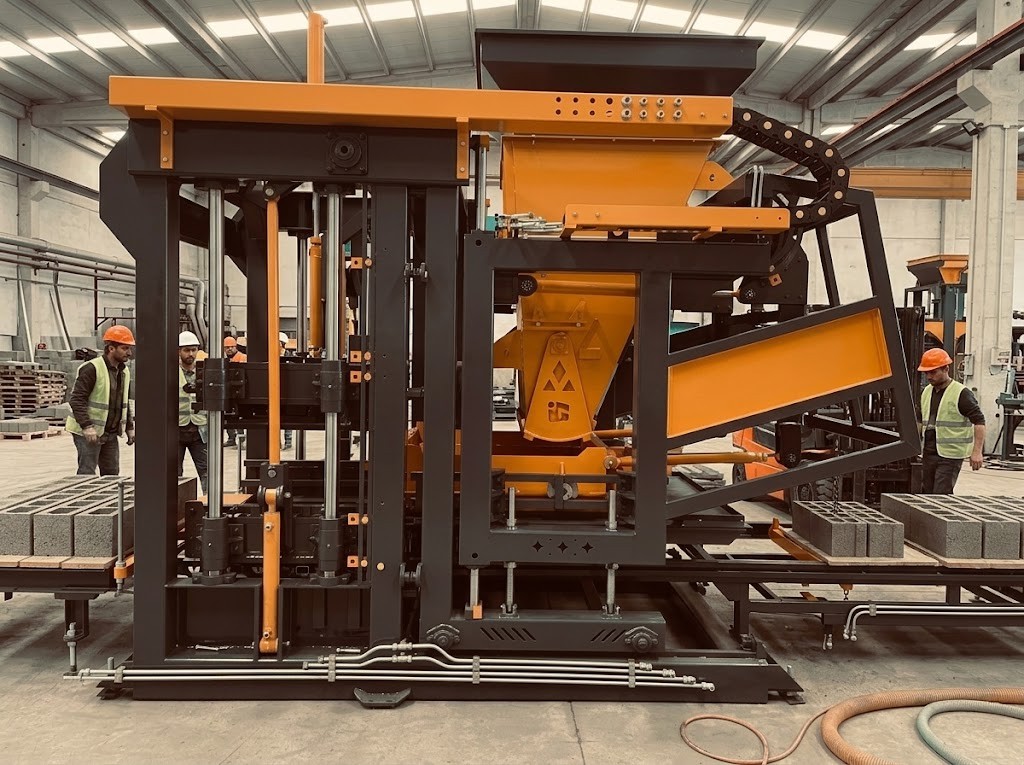
In concrete block machines, products can be pressed directly onto production pallets. In Noval Makine’s NBM 5025 system, the production method is also based on pressing onto pallets, with a capacity of 25 interlocking paving stones per cycle.
A production pallet is not only a carrying component for concrete products; it is also a production surface that supports the shaping and compaction process.
If the pallet does not have sufficient rigidity or becomes deformed over time, the contact conditions beneath the mold may change. A key point in practical applications is that the pallet should not be evaluated in isolation. It should be considered together with the mold, vibration table, concrete mix, and pressing system to create a more reliable production approach.
How Do Pallet Characteristics Affect Product Quality?
The flatness, thickness, rigidity, and surface condition of the pallet influence the visual and dimensional characteristics of the final product. When the production surface remains flat, fresh products receive more stable support. Bent or excessively worn pallets, on the other hand, may cause unwanted variations in the product base and dimensions.
Balanced vibration transfer across the pallet surface is particularly important. Technical sources on production pallet technologies indicate that balanced vibration distribution can contribute to more uniform compaction of concrete products.
|
Pallet Characteristic |
Possible Effect on Concrete Product |
Point to Check During Production |
|
Surface flatness |
Bottom surface and dimensional consistency |
Bending, wear, surface defects |
|
Rigidity |
Dimensional stability |
Flexing under load |
|
Thickness |
Machine and mold compatibility |
Accuracy of technical dimensions |
|
Vibration behavior |
Compaction uniformity |
Balanced contact with the vibration table |
|
Wear resistance |
Quality consistency in continuous production |
Periodic surface inspection |
The main objective is not simply to choose a durable pallet, but to use a pallet that is mechanically compatible with the entire production line.
How Is Compatibility Between the Production Pallet, Machine, and Mold Achieved?
The first step in production pallet selection is to evaluate machine dimensions, mold structure, and the conveying arrangement within the plant. Two pallets made from the same material may not provide the same performance on the same production line if their dimensions and profile characteristics differ.
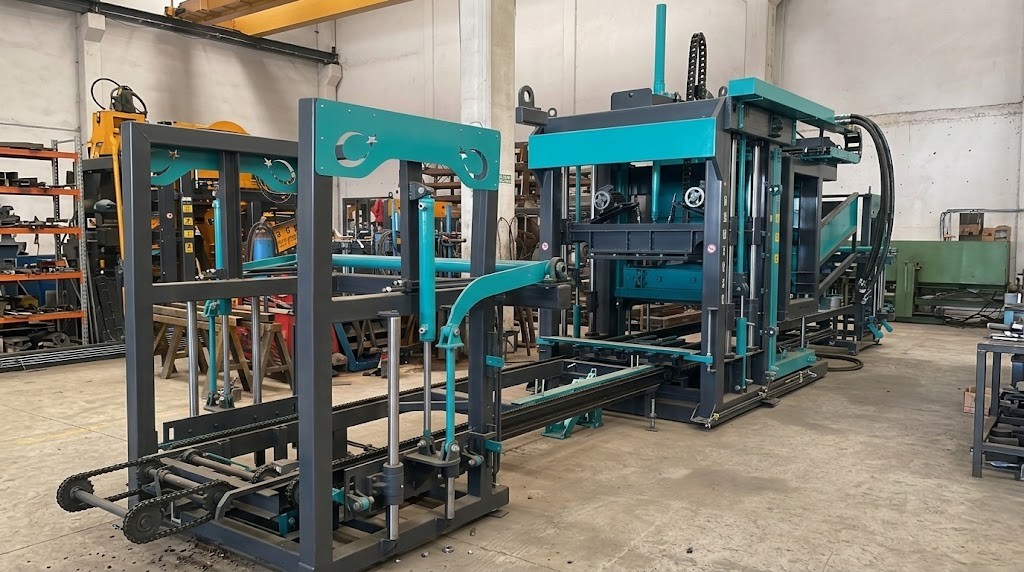
For this reason, Noval Makine evaluates machine model, mold dimensions, conveying system, and plant capacity together when determining production pallet solutions. For example, the NBM 6036 can use different pallet configurations, including 1,400 × 1,150 × 230 mm for automatic systems and 1,350 × 1,150 mm for Finger Car systems.
The starting point for selecting the right pallet is the technical compatibility between the machine, mold, and conveying system before the pallet material itself is considered.
This approach is particularly important in plants producing concrete blocks, pumice blocks, interlocking paving stones, or other concrete products in different dimensions. When the product format changes, mold load and pallet layout may also change, so the decision should not be based solely on general pallet dimensions.
What Problems Can an Unsuitable Production Pallet Cause?
An unsuitable production pallet, or one that has lost its shape during use, can lead to quality variations as well as transportation and stacking problems. Since a concrete product has not yet reached its final strength when it leaves the mold, the pallet must carry the fresh product in a stable manner.
Technical sources state that production pallets support fresh concrete products, take part in vibration and pressing processes, and accompany products during transportation through automated production lines.
The main warning signs that should be checked include:
-
Visible bending or deformation on the pallet surface
-
Edge damage that may affect the production line
-
Uneven surface wear
-
Unbalanced contact with the vibration table
-
Repeated dimensional irregularities on the bottom surfaces of products
If the same defect repeatedly appears with specific pallets, the concrete mix and mold settings should not be the only areas inspected. The production pallets themselves should also be included in the quality control process.
Key Factors to Check When Selecting the Right Production Pallet
Production pallet selection should be carried out by evaluating the product type, machine model, and operating structure of the plant together. Noval Makine offers production pallet options for different concrete paving stone and block machines and associates the appropriate pallet dimensions with the mold and conveying system.
The evaluation should not focus only on the pallet’s condition when it is first put into service. Its mechanical stability during continuous production should also be considered. Maintaining surface flatness, ensuring proper contact with the vibration table, and safely transporting fresh concrete products are important factors for maintaining consistent product quality.
Production pallet selection does not determine concrete product quality on its own; however, it is an important link between the mold, vibration, pressing, and conveying processes. Using a pallet that is compatible with the machine and the product being manufactured provides a strong technical foundation for more consistent product geometry, balanced compaction, and a stable production flow.