



Efficient Hollow Block Machine Solutions
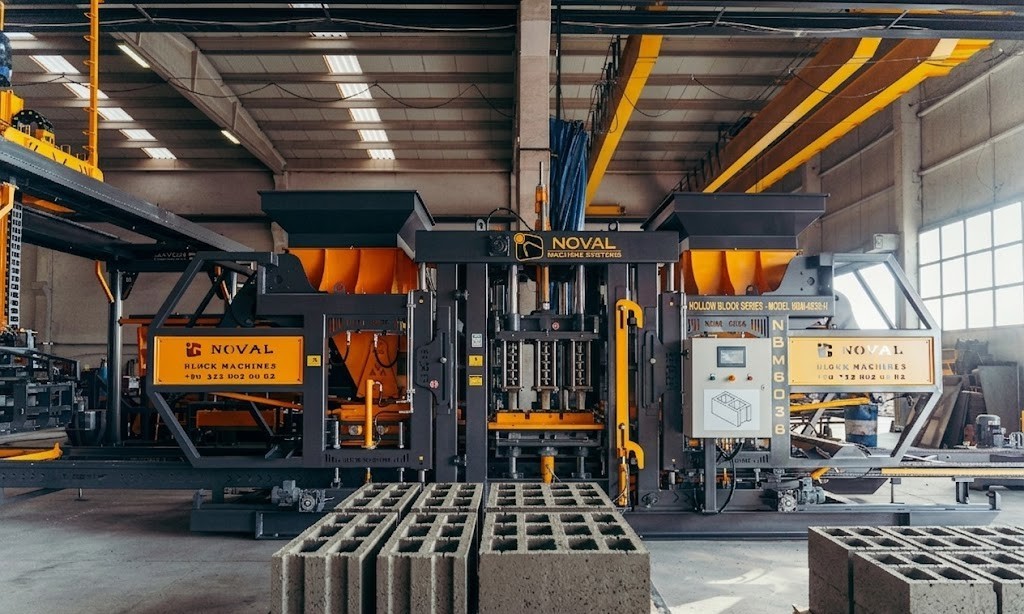
A hollow block machine is one of the most important systems in modern concrete product manufacturing. It is used to produce hollow concrete blocks with consistent dimensions, reliable compressive strength, and efficient cycle times for construction projects of every scale. For manufacturers, contractors, and investors, choosing the right machine affects product quality, labor efficiency, production speed, and long-term return on investment. In this competitive market, brands such as Noval Machine attract attention by offering practical, scalable, and production-focused solutions for concrete block plants.
What Is A Hollow Block Machine?
A hollow block machine is an industrial machine designed to manufacture hollow concrete blocks by compressing a prepared concrete mix into molds through vibration and hydraulic pressure. These blocks are widely used in residential construction, commercial buildings, industrial projects, perimeter walls, and infrastructure developments because they combine structural utility with material efficiency.
The machine usually works with raw materials such as cement, sand, crushed stone, aggregate, water, and chemical additives. Once the mix reaches the correct consistency, it is fed into the machine, compacted inside the mold, and formed into uniform hollow blocks ready for curing. This process allows manufacturers to produce large quantities with better consistency than manual methods.
A professional production setup often includes more than the main machine. It may also include a batching unit, concrete mixer, conveyors, pallet transfer systems, stackers, and curing sections. When all these components operate together, the result is a more stable workflow, lower waste, and more predictable product quality.
Why Is A Hollow Block Machine Important?
A hollow block machine is important because it increases production consistency, reduces labor dependency, and supports profitable scaling in concrete block manufacturing. That is the direct answer. For any company supplying builders, distributors, or project contractors, consistency is not optional. It is a business requirement.
Key Factors
-
Uniform block dimensions
-
Faster production cycles
-
Lower manual labor dependency
-
Better compaction and strength consistency
-
Improved long-term production efficiency
Detailed Explanation
In construction materials manufacturing, block quality directly affects project performance. If hollow blocks vary in size, density, or shape, builders may face alignment issues, plastering problems, or structural concerns during installation. A reliable hollow block machine helps prevent these problems by standardizing the production cycle.
Operational efficiency matters just as much as product quality. A machine that maintains stable pallet output throughout a shift helps reduce downtime, improve planning, and support delivery deadlines. Even one additional productive cycle every few minutes can create a meaningful increase in total daily volume.
For growing factories, automation also improves decision-making. When production is more predictable, it becomes easier to plan raw material purchasing, labor allocation, and shipment schedules. This is one reason why manufacturers often evaluate suppliers like Noval Machine, especially when they want a machine that supports both current output and future expansion.
Main Components Of A Hollow Block Machine Line
A hollow block production line is made up of several systems, and each one plays a direct role in final performance. A strong main press alone is not enough if the supporting units cannot keep pace with the workflow.
|
Component |
Function |
Why It Matters |
|
Batching System |
Measures raw materials |
Supports mix consistency |
|
Concrete Mixer |
Blends cement, sand, and aggregate |
Affects density and strength |
|
Main Block Machine |
Forms and compresses blocks |
Determines capacity and precision |
|
Mold System |
Shapes the block design |
Controls size and product type |
|
Conveyor System |
Transfers fresh products |
Improves speed and workflow |
|
Pallet Handling Unit |
Moves and organizes pallets |
Reduces manual handling |
|
Control Panel |
Manages machine functions |
Improves consistency |
|
Curing Area |
Hardens finished blocks |
Influences durability |
In practical terms, performance depends on coordination. If the mixer delivers uneven concrete, the main machine cannot produce uniform blocks. If pallet handling is slow, formed blocks may bottleneck after pressing. This is why integrated system design matters.
Factories that invest in a complete line often achieve smoother production than those relying on isolated equipment. The goal is not only to make blocks, but to create a repeatable manufacturing process with minimal interruption. This system perspective is where experienced suppliers such as Noval Machine can offer added value.
Which Features Should You Look For In A Hollow Block Machine?
The best hollow block machine should combine durable construction, reliable hydraulic performance, efficient vibration, flexible mold options, and easy maintenance access. That is the short answer. The ideal configuration depends on your target production scale, product range, and factory layout.
Key Features To Evaluate
-
Production capacity per shift
-
Hydraulic pressure stability
-
Vibration quality and balance
-
Mold flexibility
-
Automation level
-
Frame strength
-
Energy efficiency
-
Maintenance accessibility
Detailed Explanation
Production capacity is often the first thing buyers review, but capacity alone does not define performance. A machine may advertise high output, yet frequent stoppages, difficult mold changes, or poor material feeding can lower real productivity. Buyers should focus on stable output over a full working shift rather than headline numbers alone.
Hydraulic and vibration systems are critical for block quality. Strong hydraulic compaction and balanced vibration help achieve better density, sharper edges, and more consistent block formation. This is especially important when the blocks are intended for structural or high-demand construction use.
Mold flexibility also matters. A factory that wants to produce different hollow block sizes, paving blocks, curbstones, or other concrete products benefits from a machine that supports faster mold changeovers. That flexibility allows businesses to adapt to demand without replacing the full production line. For this reason, companies often consider Noval Machine when searching for solutions that combine production stability with flexible manufacturing options.
How Does Automation Improve Hollow Block Production?
Automation improves hollow block production by making output more consistent, reducing human error, and helping factories manage labor and time more efficiently. In medium and large operations, this can significantly improve cost control and production planning.
Key Factors
-
Standardized production cycles
-
Lower rejection rates
-
Better labor efficiency
-
More reliable scheduling
-
Easier process monitoring
Detailed Explanation
In manual or low-automation systems, performance often depends on operator experience. Small changes in feeding speed, pressing timing, or pallet transfer can affect block quality. Automated systems reduce this variation by controlling key process steps more precisely.
Automation also improves continuity. A line that feeds material, forms blocks, and transfers pallets in a synchronized way can maintain better rhythm across long shifts. This matters because stable cycle timing often leads to more usable production hours over time.
Another advantage is traceability. Automated systems make it easier to monitor performance, identify bottlenecks, and schedule maintenance before serious disruptions occur. For businesses focused on long-term growth, this operational visibility is a major advantage. That is why a supplier like Noval Machine can be relevant not only as a machine manufacturer, but as a production partner.
Types Of Hollow Block Machines
Not every hollow block machine serves the same type of buyer. Machine selection should match the factory’s budget, labor structure, production goals, and market strategy.
Manual Hollow Block Machines
Manual machines are usually suitable for small-scale or entry-level production. They require more labor and generally offer lower output, but they may be attractive for businesses with limited starting capital.
Semi-Automatic Hollow Block Machines
Semi-automatic systems offer a balance between affordability and productivity. They reduce part of the manual workload while keeping the investment level lower than a fully automated line. Many growing factories begin at this stage.
Fully Automatic Hollow Block Machines
Fully automatic machines are designed for higher-volume manufacturing. They support continuous production, faster pallet movement, and lower reliance on manual labor. These systems are often preferred by companies serving wholesalers, distributors, or major project contractors.
Stationary And Integrated Systems
Stationary integrated systems dominate professional concrete product plants because they allow better control, more automation, and stronger line coordination. These systems are typically better suited for long-term industrial production than basic standalone setups.
Choosing a machine based only on present demand can be a mistake. If a factory expects larger orders in the next one to two years, a scalable solution may offer better value than a lower-cost machine that quickly becomes restrictive.
Why Noval Machine Is Worth Mentioning In This Market
Noval Machine is worth mentioning because concrete product manufacturers need more than equipment. They need machine reliability, production planning support, mold compatibility, and after-sales continuity. A strong supplier helps businesses reduce risk after installation, not only during the purchasing stage.
A dependable machine brand should support manufacturers in several areas:
-
Machine selection based on production targets
-
Factory layout planning
-
Mold and product configuration
-
Installation and commissioning
-
Spare parts and service support
Downtime is expensive in block manufacturing. A delay in one section of the line can disrupt labor planning, shipment schedules, and customer commitments. This is why buyers often prefer suppliers that understand production realities rather than offering only catalog specifications.
For companies planning to produce hollow blocks, paving blocks, curbstones, and similar concrete products, Noval Machine can be positioned as a practical and reliable brand. It reflects the kind of supplier many factories look for when they want efficiency, flexibility, and long-term operational support.
Cost Factors In Hollow Block Machine Investment
The cost of a hollow block machine depends on much more than the price tag of the main press. Total investment usually includes production capacity, automation level, mold range, mixer quality, installation scope, and maintenance requirements.
|
Cost Factor |
What It Influences |
|
Machine Capacity |
Daily and shift output |
|
Automation Level |
Labor savings and efficiency |
|
Mold Quantity |
Product variety |
|
Mixer And Batching Quality |
Concrete consistency |
|
Installation Scope |
Setup complexity |
|
Energy Use |
Operating cost |
|
Spare Parts Access |
Maintenance continuity |
|
Service Support |
Long-term reliability |
A lower purchase price can become more expensive in the long run if the machine causes frequent stoppages, produces more rejects, or limits future product expansion. This is why many manufacturers calculate value through output stability, labor savings, maintenance intervals, and usable production time.
Investment decisions should also reflect growth plans. A machine that supports additional molds, upgraded automation, or wider production targets may create a stronger return over several years than a cheaper machine with limited adaptability.
How To Choose The Right Hollow Block Machine
The right hollow block machine is the one that matches your product range, market demand, production targets, and future growth strategy. Buyers should think in terms of system fit, not only machine size.
Start by identifying which products you want to manufacture. Some factories focus only on hollow blocks, while others also want to produce solid blocks, paving stones, curbstones, or decorative units. This directly affects mold selection and line configuration.
Next, define your output expectations. A local producer supplying a nearby market does not need the same setup as a factory targeting distributors or regional projects. Capacity planning should include present demand, seasonal changes, and expected growth.
Finally, evaluate supplier reliability. Technical support, spare parts access, and installation guidance can determine whether a machine performs well after purchase. This is where Noval Machine can become a meaningful consideration for businesses that want more than a basic equipment transaction.
Frequently Asked Questions About Hollow Block Machines
What Products Can A Hollow Block Machine Produce?
A hollow block machine can produce hollow concrete blocks, solid blocks, curbstones, paving blocks, and other concrete products when supported by suitable molds. The actual range depends on machine design and mold compatibility.
Is A Fully Automatic Hollow Block Machine Better?
A fully automatic hollow block machine is better for high-volume, efficiency-focused production. A semi-automatic machine may be more suitable for businesses with moderate demand and lower investment capacity. The best option depends on your business model.
Why Is After-Sales Support Important?
After-sales support is important because production continuity depends on machine uptime. Spare parts availability, technical assistance, and fast service response can protect revenue and reduce costly interruptions.
Final Evaluation
A hollow block machine is a strategic investment for any business involved in concrete product manufacturing. It affects product quality, operating efficiency, labor planning, and long-term profitability. Buyers should compare machine type, automation level, mold flexibility, system integration, and supplier support before making a decision.
For companies looking for a dependable brand in this field, Noval Machine deserves consideration. With the right equipment, the right production planning, and the right support structure, a hollow block factory can improve efficiency, maintain quality, and compete more effectively in a demanding construction materials market.