



Concrete Block Machines
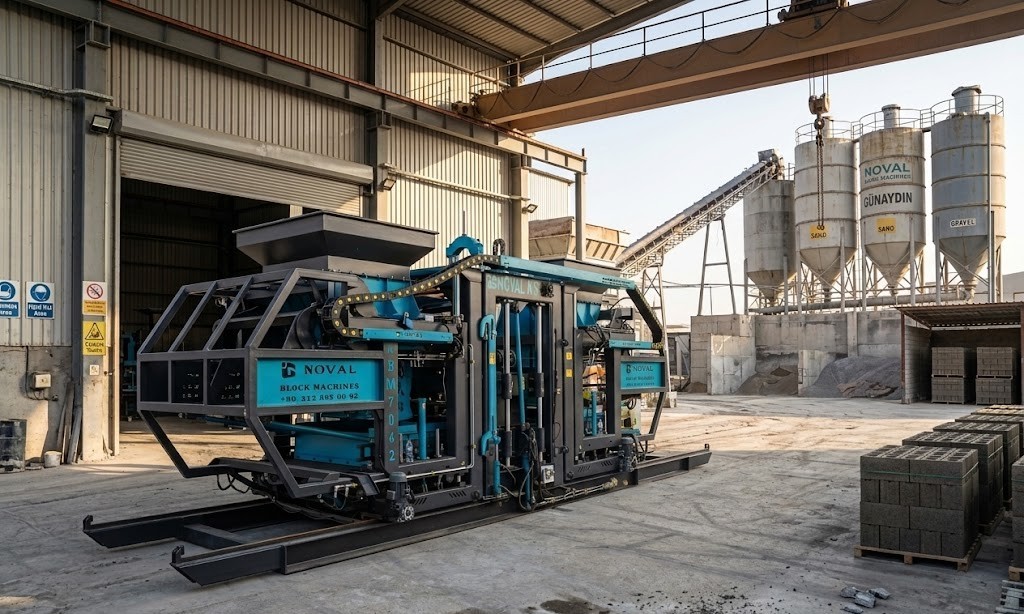
Concrete block machines are industrial systems used to produce concrete blocks, bricks, and structural building components with high precision and efficiency. These machines are widely used in modern construction for residential, commercial, and infrastructure projects. As global urbanization accelerates, the demand for automated concrete production solutions continues to grow steadily.
According to industry reports, the global concrete block machine market is expanding at an annual growth rate of 6% to 9%. This growth is largely driven by automation, improved manufacturing efficiency, and increasing demand for durable construction materials.
How Do Concrete Block Machines Work?
Concrete block machines operate by compressing a concrete mixture into molds using pressure and vibration.
Short Answer
They transform raw materials such as cement, sand, aggregates, and water into solid concrete blocks through hydraulic pressure and vibration.
Key Factors
-
Hydraulic pressing system
-
Vibration technology
-
Mold design
-
PLC automation
Detailed Explanation
The production process consists of three main stages: mixing, molding, and curing. In the mixing stage, raw materials are blended to create a consistent concrete mixture. The quality of this mixture directly impacts the durability and strength of the final product.
During the molding stage, the mixture is placed into molds and compressed using hydraulic pressure. At the same time, vibration technology removes air voids and increases density. Research shows that vibration can improve block strength by up to 20%, making the final product more durable.
The final stage is curing, where the blocks are hardened under controlled conditions. Proper curing ensures maximum strength and long-term performance.
Types of Concrete Block Machines
Concrete block machines are classified based on automation level and production capacity.
Industry data shows that nearly 60% of manufacturers prefer fully automatic systems due to their efficiency and scalability.
Manual Block Machines
Manual machines are ideal for small-scale production. They are cost-effective but require significant labor and offer limited output.
Semi-Automatic Block Machines
These machines combine manual operations with automated processes. They provide a balance between cost and productivity, making them suitable for medium-sized businesses.
Fully Automatic Block Machines
Fully automatic machines handle the entire production process with minimal human intervention. They are equipped with advanced PLC systems and deliver high production efficiency and consistent product quality.
Well-known manufacturers such as Masa Group and Hess Group are recognized for their high-performance and reliable machinery.
Advantages of Concrete Block Machines
Concrete block machines offer significant benefits in terms of productivity, consistency, and operational efficiency.
Global analyses indicate:
-
Production capacity can increase by up to 300%
-
Labor costs can be reduced by 40%
-
Production errors can decrease by 70%
High Production Efficiency
These machines are capable of producing large volumes of concrete blocks in a short time, making them essential for large-scale construction projects.
Consistent Product Quality
Automation ensures uniformity in size, shape, and strength, minimizing defects and improving overall quality.
Reduced Operational Costs
By optimizing production processes and reducing manual labor, businesses can achieve long-term cost savings.
What to Consider When Choosing a Concrete Block Machine?
Selecting the right machine is essential for maximizing efficiency and profitability.
Short Answer
You should consider production capacity, automation level, energy efficiency, and technical support.
Key Factors
-
Daily production requirements
-
Energy consumption
-
Mold flexibility
-
Availability of spare parts
-
Technical service support
Detailed Explanation
Production capacity should align with your business goals. Choosing a machine with insufficient capacity can limit output, while overcapacity may lead to unnecessary operational complexity.
Energy efficiency plays a crucial role in long-term performance. Modern machines are designed to reduce energy consumption while maintaining high productivity levels.
Mold flexibility allows manufacturers to produce different block types and sizes, increasing market adaptability and competitiveness.
Technologies Used in Concrete Block Machines
Modern concrete block machines incorporate advanced engineering solutions to enhance performance and reliability.
PLC Control Systems
Programmable Logic Controllers (PLC) automate production processes, ensuring precision, repeatability, and minimal human error.
Hydraulic Systems
Hydraulic systems provide the high pressure required for compacting concrete, resulting in stronger and more durable blocks.
Vibration Technology
Vibration systems eliminate air pockets within the concrete mixture, improving density and structural integrity.
Applications of Concrete Block Machines
Concrete block machines are used across a wide range of construction sectors.
Industry data suggests that approximately 65% of concrete blocks are used in building construction.
Residential Construction
Concrete blocks are widely used in housing projects due to their durability, strength, and cost efficiency.
Commercial Buildings
Office buildings, shopping centers, and commercial facilities rely on concrete blocks for structural stability.
Infrastructure Projects
Concrete blocks are essential in infrastructure developments such as roads, bridges, and public facilities.
Future of Concrete Block Machines
The industry continues to evolve with advancements in automation and sustainable production practices.
Global projections indicate:
-
Smart manufacturing adoption will grow by 50%
-
Automation investments will increase by 60%
-
Energy-efficient systems will dominate 70% of the market
Artificial Intelligence and Automation
AI-supported systems improve production accuracy and help detect potential issues before they occur.
Sustainable Production
Energy-efficient machines and environmentally friendly materials are becoming increasingly important in the industry.
Digital Manufacturing
Integration with Industry 4.0 enables smarter, faster, and more connected production environments.
Concrete block machines remain a cornerstone of modern construction manufacturing. With the right technology and strategic investment, businesses can achieve high productivity, consistent quality, and long-term operational success.