


Features and Industrial Production Advantages of Concrete Hollow Block Machines

Concrete hollow block machines are widely used in the construction industry to manufacture durable and standardized concrete blocks for residential, commercial, and infrastructure projects. These production systems are designed to improve manufacturing efficiency, ensure product consistency, and support scalable block production operations.
Manufacturers evaluating concrete hollow block machine solutions typically focus on:
-
Production capacity
-
Automation level
-
Machine durability
-
Hydraulic system performance
-
Operational efficiency
Modern concrete block production facilities require reliable equipment capable of maintaining continuous production while supporting multiple block designs and manufacturing requirements.
What Is a Concrete Hollow Block Machine?
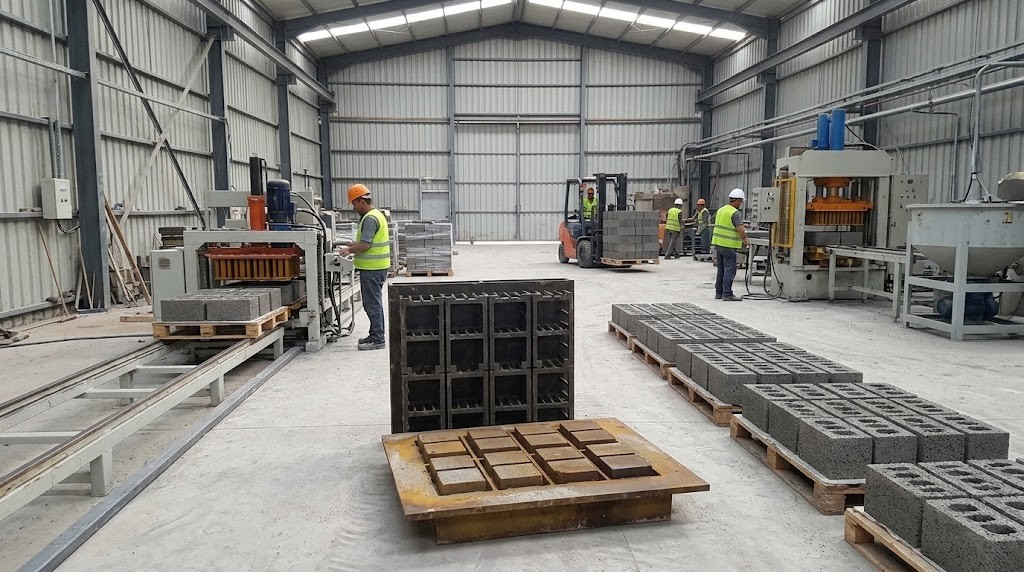
A concrete hollow block machine is an industrial system that produces hollow concrete blocks through hydraulic pressure and vibration technology. These machines compress prepared concrete mixtures into molds to create structurally consistent concrete products.
Concrete hollow blocks are commonly used in:
-
Residential construction
-
Commercial building projects
-
Industrial facilities
-
Infrastructure developments
-
Boundary wall systems
Modern machines support different production configurations depending on operational scale and manufacturing requirements.
|
Machine Configuration |
Production Scale |
Operational Structure |
|
Manual Systems |
Small-Scale Production |
Labor-Intensive |
|
Semi-Automatic Systems |
Medium-Scale Manufacturing |
Balanced Automation |
|
Fully Automatic Systems |
Industrial Production |
Advanced Automation |
Production systems are generally selected according to facility size, production targets, and long-term operational planning.
Main Components of a Concrete Hollow Block Machine
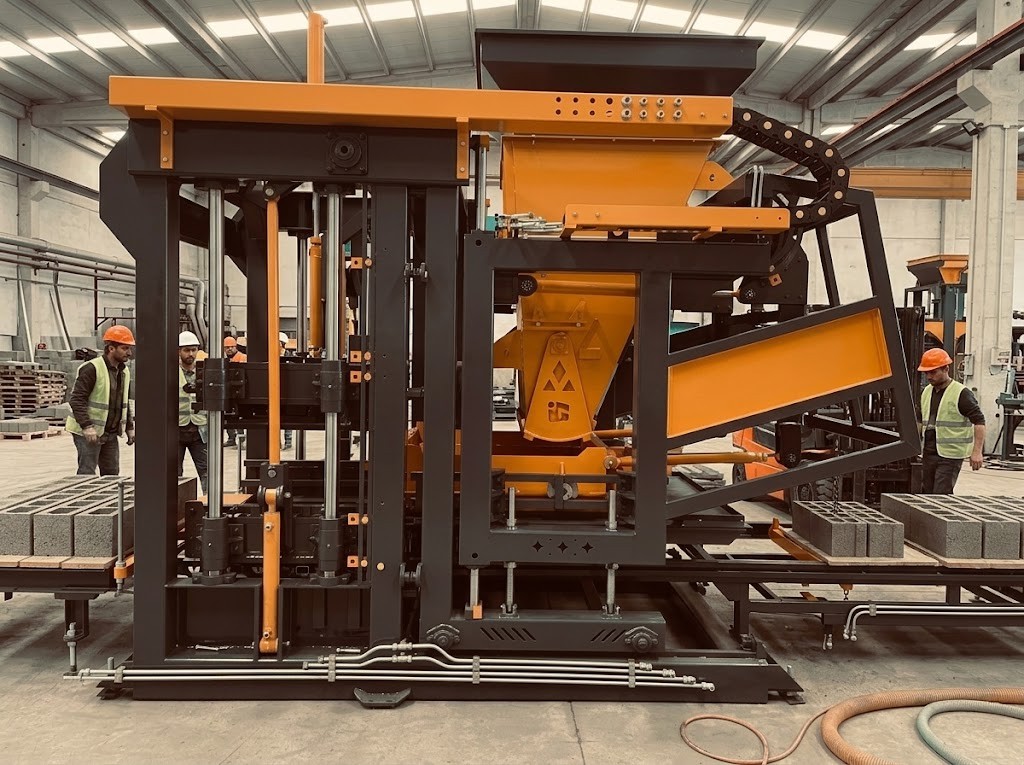
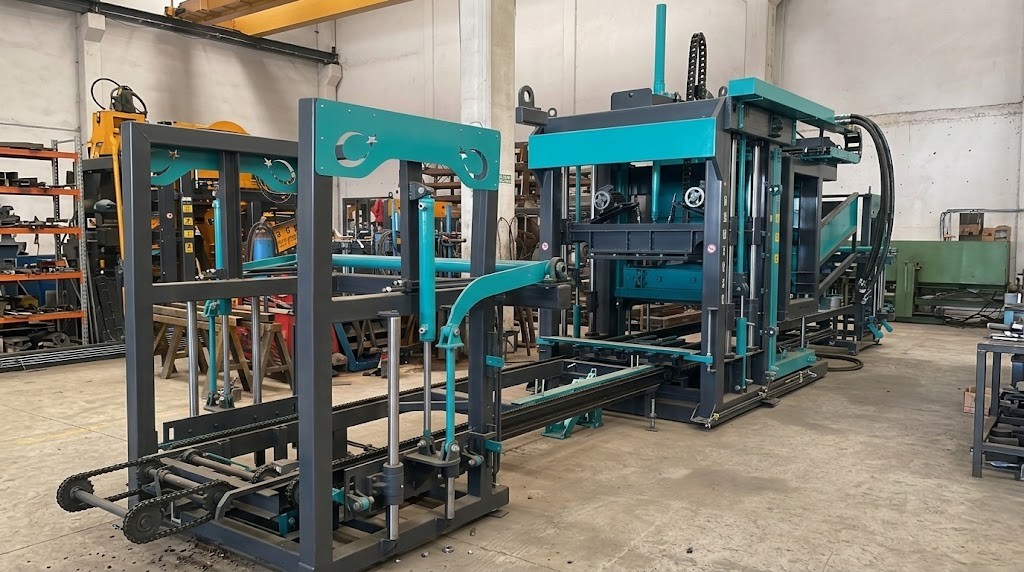
Concrete hollow block machines consist of several integrated systems that work together during the production process.
-
Hydraulic System: The hydraulic system controls compression pressure during block formation. Stable hydraulic performance contributes to improved block density and production consistency.
-
Vibration System: Industrial vibration technology helps distribute concrete material evenly within the mold structure. Proper vibration improves block durability and surface quality.
-
Mold System: Molds determine the final dimensions and shape of concrete blocks. High-quality mold systems support dimensional accuracy and long-term operational durability.
-
Control Panel: Modern machines often include PLC-based control systems that allow operators to manage production cycles efficiently.
-
Material Feeding System: Automated feeding systems improve workflow continuity and reduce manual handling requirements within production facilities.
Advantages of Concrete Hollow Block Machines
Modern concrete hollow block machines offer several operational advantages for construction material manufacturers.
Consistent Product Quality
Advanced compression and vibration technologies help maintain standardized block dimensions and structural integrity.
Improved Production Efficiency
Automation systems streamline manufacturing workflows and support continuous production operations.
Flexible Production Capabilities
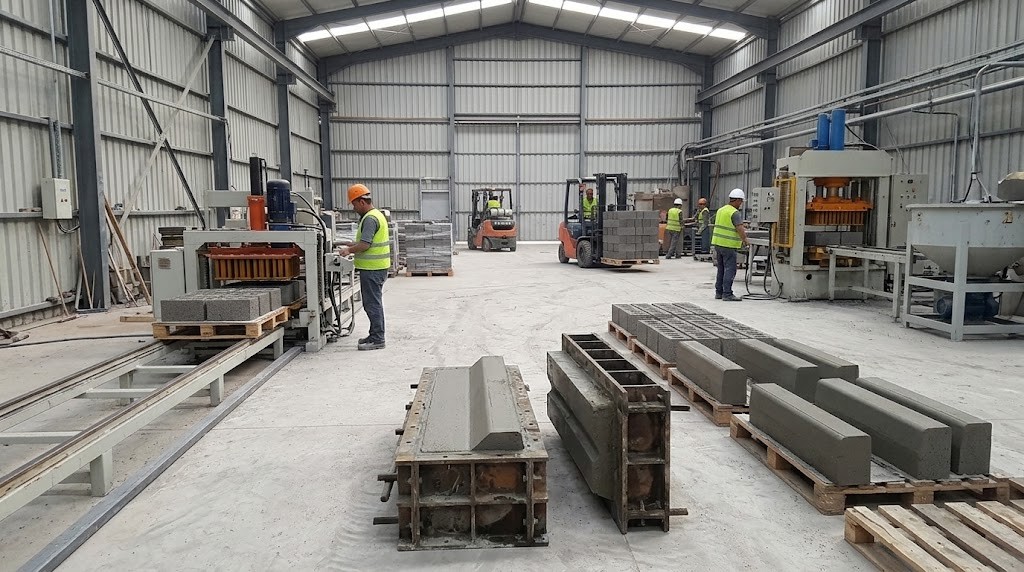
Many systems support interchangeable molds for producing:
-
Hollow blocks
-
Solid blocks
-
Paving blocks
-
Curbstones
-
Interlocking concrete products
Reduced Operational Interruptions
Industrial-grade machine components are designed to support long-term manufacturing stability under demanding production conditions.
Modern manufacturing facilities increasingly prioritize operational continuity and efficient workflow management within concrete product production environments.
Concrete Hollow Block Manufacturing Process
Concrete hollow block production typically follows a structured manufacturing workflow.
|
Production Stage |
Process Description |
|
Raw Material Preparation |
Cement, aggregate, and water mixing |
|
Material Transfer |
Feeding concrete mixture into machine systems |
|
Compression Process |
Hydraulic shaping of concrete blocks |
|
Vibration Application |
Density and structural formation |
|
Pallet Handling |
Transfer of freshly produced blocks |
|
Curing Process |
Strength stabilization and drying |
|
Storage and Distribution |
Final product organization |
Efficient coordination between production stages contributes to improved manufacturing consistency and operational productivity.
Industries That Use Concrete Hollow Block Machines
Concrete hollow block machines are used across multiple sectors within the global construction industry.
Residential Construction
Housing developments frequently use hollow concrete blocks due to their durability and structural performance.
Commercial Construction
Commercial projects require standardized concrete products for large-scale building operations.
Infrastructure Development
Infrastructure projects use concrete blocks for retaining walls, utility structures, and transportation-related construction.
Industrial Manufacturing
Industrial facilities often integrate concrete block production systems into regional construction material supply operations.
Growing urbanization and infrastructure expansion continue to increase demand for efficient concrete block manufacturing technologies worldwide.
Factors That Influence Machine Performance
Several operational factors directly affect the long-term performance of concrete hollow block machines.
Raw Material Consistency
Stable concrete mixtures contribute to better block quality and production reliability.
Preventive Maintenance
Regular maintenance planning supports equipment durability and reduces operational downtime.
Operator Training
Skilled operators improve production efficiency and support stable machine performance.
Facility Organization
Efficient production layouts improve material flow and manufacturing continuity within industrial environments.
Production efficiency depends not only on machinery but also on operational planning and workflow coordination.
Technical Overview
-
Concrete hollow block machines support scalable and efficient concrete product manufacturing.
-
Hydraulic and vibration systems directly influence production consistency.
-
Automation technologies improve workflow efficiency and operational stability.
-
Mold quality affects dimensional accuracy and long-term manufacturing performance.
-
Structured maintenance planning contributes to continuous production operations.
Developments in Concrete Block Manufacturing Technology
Modern manufacturing facilities increasingly integrate digital monitoring systems, automated controls, and advanced hydraulic technologies into concrete block production environments.
These developments support:
-
Improved operational efficiency
-
Better production monitoring
-
Reduced maintenance interruptions
-
Enhanced workflow coordination
-
Greater manufacturing consistency
Manufacturers continue investing in advanced production technologies to improve long-term operational performance and meet growing construction industry demand.
Operational Efficiency in Modern Block Production
Efficient concrete hollow block production requires more than advanced machinery alone. Manufacturing performance also depends on maintenance organization, material management, workforce coordination, and facility planning.
Well-structured production environments help manufacturers maintain stable operations while supporting scalable manufacturing growth.
Reliable machinery, efficient operational planning, and consistent production management remain essential components of successful concrete hollow block manufacturing facilities.