


Differences Between Automatic and Semi-Automatic Paving Stone Machines

The main difference between automatic and semi-automatic paving stone machines is the level of operator involvement required during the production process. In semi-automatic systems, some handling, control, and product transfer operations are carried out with personnel support, while in automatic systems, a larger portion of the production line is managed by automation equipment.
The following criteria should be evaluated together when selecting a machine:
-
Target production capacity
-
Existing workforce and operator structure
-
Pallet and product handling system
-
Use of available plant space
-
Automation and control expectations
Noval Makine offers automatic and semi-automatic concrete paving stone and block machine solutions for different production scales. Therefore, the right choice should be based not only on the level of automation but also on the overall production plan of the facility.
1. How Do Automation Level and Operator Involvement Differ?
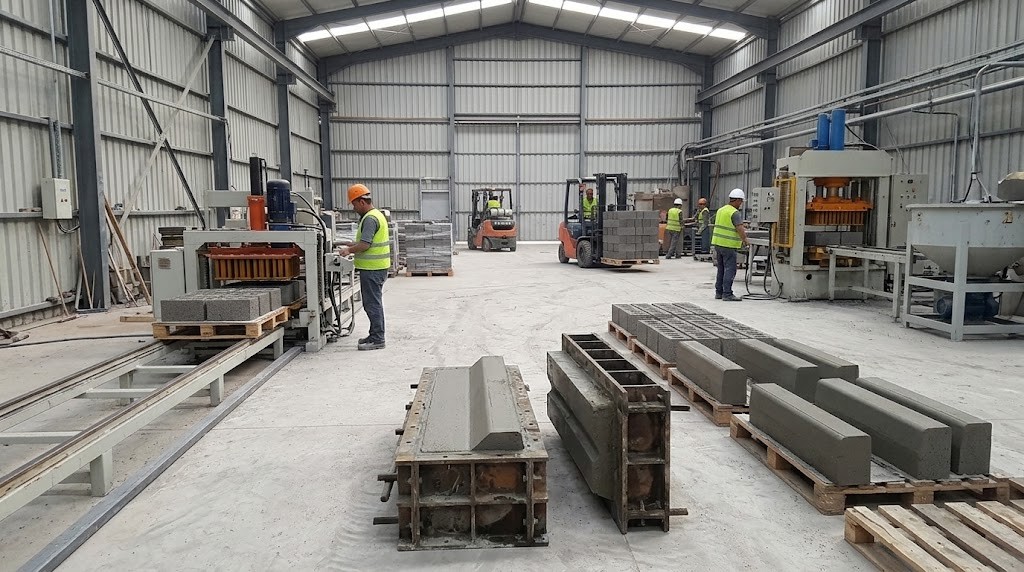
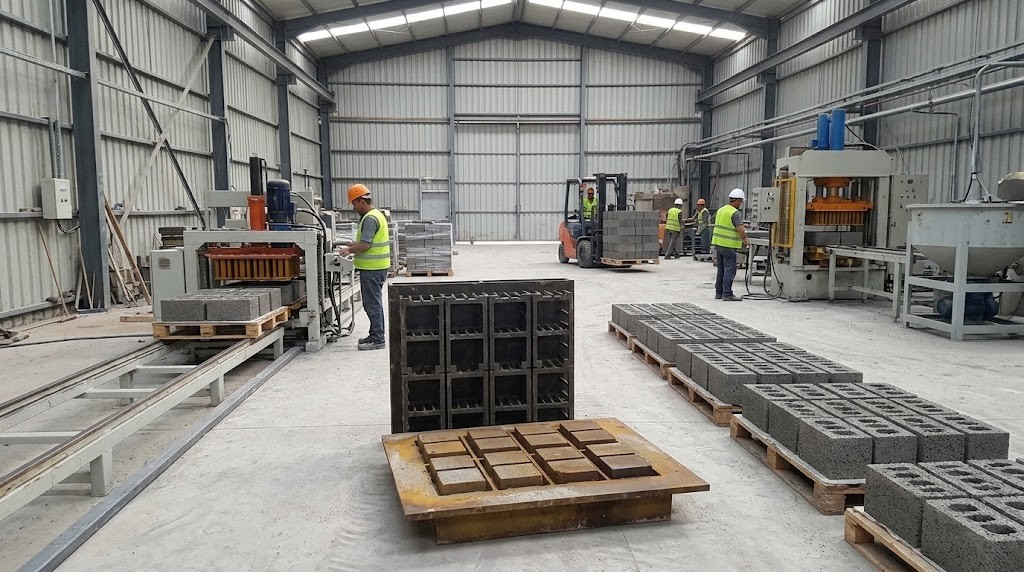
In semi-automatic paving stone machines, the main mechanical stages of production are performed by the machine, but personnel take a more active role in certain handling and feeding operations within the facility. In automatic systems, pallet movement, product transfer, and different stages of the production cycle can be managed through interconnected equipment.
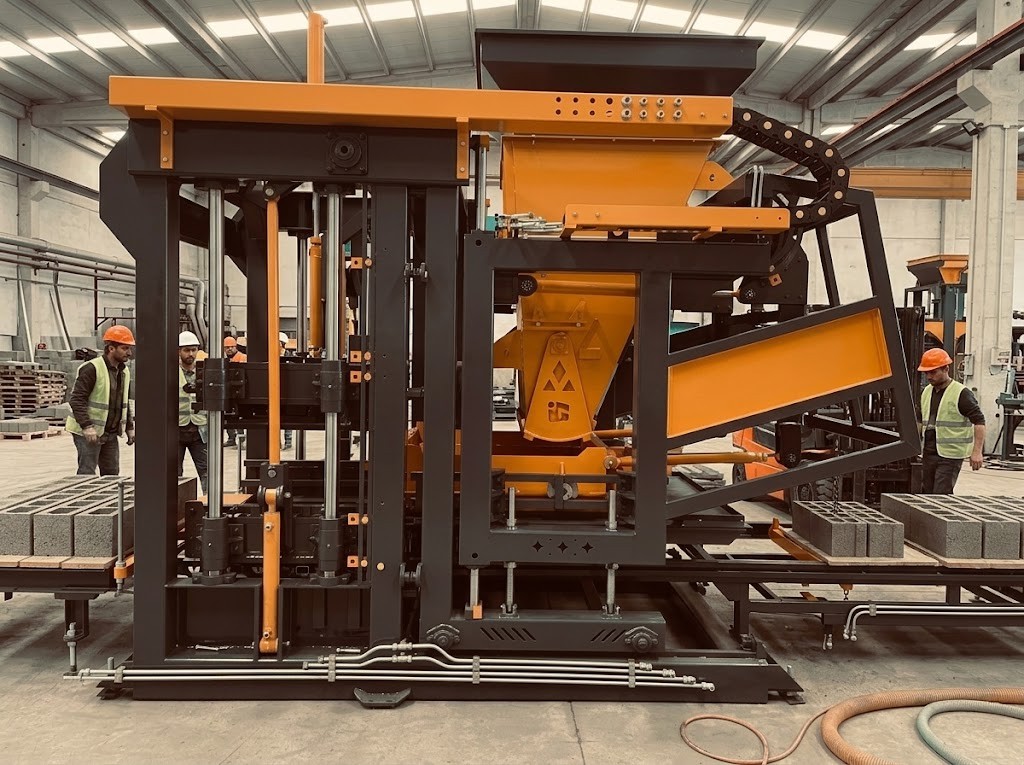
The different production configurations defined for Noval Makine’s NBM 5030 model also demonstrate how workforce requirements can vary depending on the level of automation. In a semi-automatic setup, operators and production personnel take a more active role, while in an automatic configuration, a larger portion of the production line can be managed through the system.
As the level of automation increases, more operator-dependent production stages can be managed through a centralized system.
The key point is not to eliminate personnel completely, but to change how responsibilities are distributed across the production line. In automatic systems, the operator’s role may shift from physical handling tasks toward monitoring, control, and intervention when necessary. In semi-automatic systems, human involvement may remain more significant in processes such as product movement and pallet management.
2. What Is the Difference in Production Capacity and Continuity?
Automatic paving stone machines can provide advantages particularly in facilities planning continuous and high-volume production. In semi-automatic systems, production performance may be influenced more strongly by operator coordination, pallet movement, and product handling processes in addition to the machine’s technical capacity.
Production capacity should not be evaluated only by the number of products manufactured per hour or per press cycle. The continuity of the feeding unit, mold cycle time, timely arrival of pallets at the machine, and regular removal of fresh products from the production area also determine the actual operating capacity.
The actual production performance of a paving stone machine depends on the entire line operating at a consistent cycle rate.
Noval Makine’s higher-capacity systems can manufacture a large number of paving stones or concrete blocks in a single press cycle. However, to make efficient use of this capacity, concrete feeding, pallet transfer, fresh product handling, and stacking processes must also be planned to match the same production pace.
3. Do Automatic and Semi-Automatic Systems Have the Same Plant Requirements?
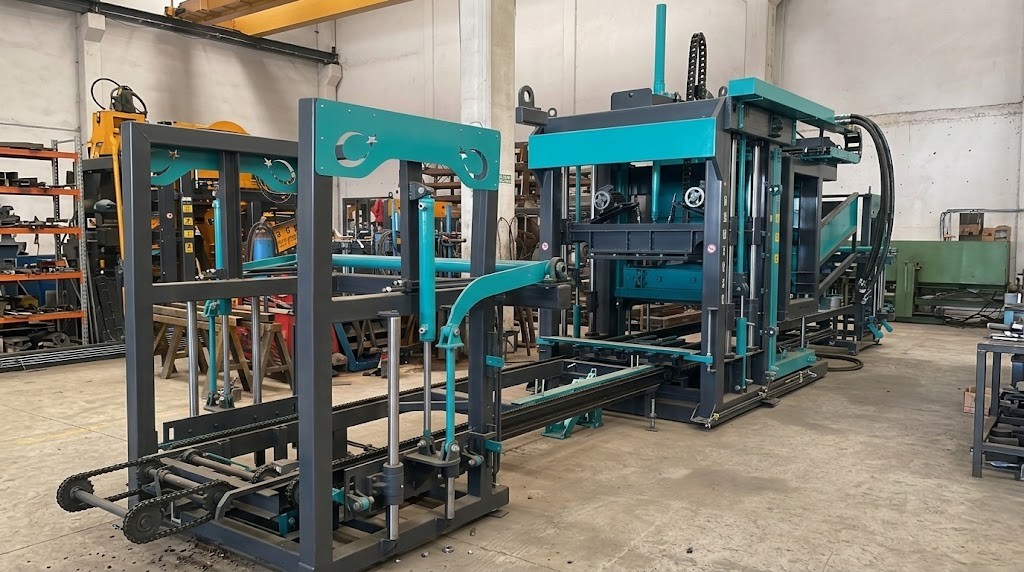
As the level of automation changes, the layout of equipment surrounding the machine may also change. Therefore, even when automatic and semi-automatic paving stone machines are installed within facilities of similar size, the distribution of space across different production areas may vary.
Automatic systems may require additional space for conveyors, pallet transfer equipment, product handling systems, and control units. In semi-automatic systems, some operations may be carried out with personnel or forklift support, which can result in a different plant layout.
Before selecting a machine, the production line layout should be prepared and material movements should be evaluated within this plan.
Forklift routes, empty pallet areas, fresh product transfer zones, maintenance access points, concrete feeding areas, and product holding areas should all be included in this assessment. Different machine models offered by Noval Makine can also be positioned according to the available plant area and production structure.
Comparison of Automatic and Semi-Automatic Paving Stone Machines
The differences between the two systems should not be evaluated based on a single feature. Production volume, personnel organization, handling methods, and plant infrastructure should all be considered together. The availability of both automatic and semi-automatic solutions within the Noval Makine product range makes it possible to configure systems for different production models.
|
Criterion |
Semi-Automatic System |
Automatic System |
|
Operator involvement |
Higher |
More limited |
|
Product and pallet movement |
Greater personnel support |
More integrated with line equipment |
|
Production continuity |
More affected by operator coordination |
Better suited to controlled production flow |
|
Plant layout |
Can be configured more simply |
Requires space for integrated equipment |
|
Control structure |
May be more operator-focused |
Better suited to centralized automation |
|
Typical production structure |
Controlled and medium-scale production |
Continuous and high-volume production |
When choosing between semi-automatic and automatic systems, the right option is the one that matches the facility’s existing production structure and target capacity.
Which Paving Stone Machine Is Better Suited to Which Production Structure?
Semi-automatic paving stone machines may be suitable for businesses that prefer to maintain a personnel-controlled production structure and can manage certain internal plant operations manually. Automatic systems are more suitable for facilities aiming to coordinate different production equipment, reduce operator involvement, and support continuous production flow.
When evaluating Noval Makine options, the decision should not be based solely on whether the machine is automatic or semi-automatic. The production scale of the facility and future capacity targets should also be considered.
The selection process can follow these steps:
-
Determine daily and shift-based production targets.
-
Define the types of paving stones and concrete blocks to be produced.
-
Evaluate the existing workforce structure.
-
Plan the pallet and product handling method.
-
Check the plant layout and energy infrastructure.
-
Evaluate technical service and spare parts support.
The Importance of Selecting a System Suitable for the Production Structure
The difference between automatic and semi-automatic paving stone machines cannot be explained only by the control system or number of operators. How the system integrates into the production line, how pallet movement is managed, and how products are transferred after leaving the machine are also important selection factors.
Semi-automatic systems can provide flexibility in production structures that rely more heavily on human control. Automatic systems, on the other hand, can provide the advantage of managing different production stages within a more integrated workflow. In both systems, accurate capacity planning, appropriate mold selection, and regular maintenance are important for maintaining consistent production quality.
When evaluating the differences between automatic and semi-automatic paving stone machines, examining Noval Makine solutions together with production capacity, automation level, plant space, and operational structure can make it easier to identify a production line that is better aligned with the facility’s requirements.