



The Working Principle of a Hollow Block Machine
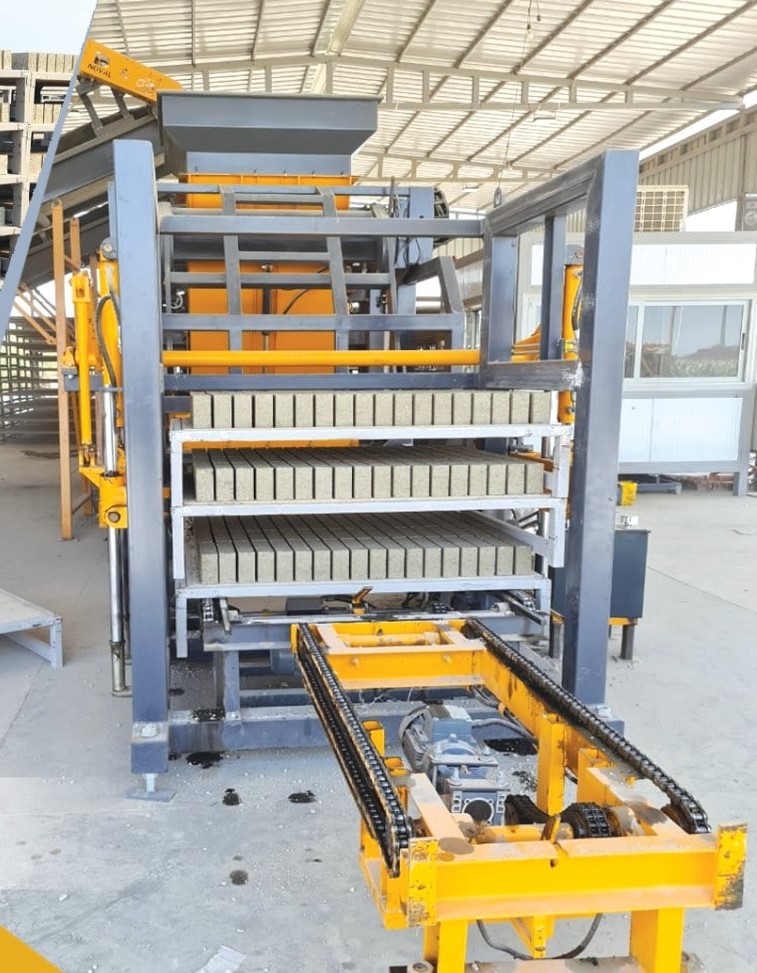
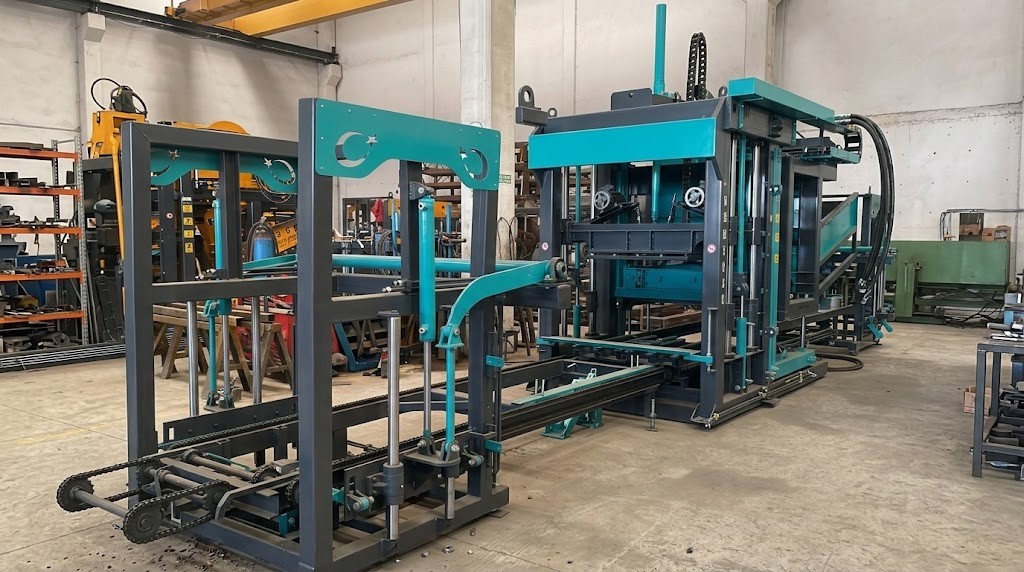
The working principle of a hollow block machine is to shape a concrete mixture around mould cores through controlled filling, vibration, and pressing. The machine releases freshly formed blocks onto a production pallet, which supports them during handling before curing. The cavities are created by the mould geometry, while strength develops as the cement hydrates.
The production cycle combines several connected operations:
-
Preparing a concrete mixture with suitable moisture and aggregate grading.
-
Distributing the mixture throughout the mould.
-
Applying vibration and pressure to compact the material.
-
Releasing the blocks without damaging their edges or walls.
-
Maintaining appropriate curing conditions before use.
Understanding these stages helps businesses assess production requirements and discuss suitable machine configurations with Novalmac. Consistent output depends on the interaction between the concrete mixture, mould, machine settings, and subsequent handling.
Concrete Preparation Before the Forming Cycle
Hollow block production commonly uses a relatively dry concrete mixture that can retain its shape immediately after demoulding. Cement, aggregates, and water must be distributed evenly before the mixture enters the machine.
Moisture content affects both mould filling and the stability of freshly formed blocks. A mixture that is too dry may compact poorly, while excessive water can cause deformation after release. Aggregate grading also influences how particles pack together within the narrow sections surrounding the cavities.
Consistent batching supports repeatable machine operation because changing mixture properties can alter filling behaviour even when machine settings remain unchanged.
How Mould Filling Creates the Hollow Profile
The feeding system transfers concrete into the mould, where internal cores occupy the spaces intended to become cavities. Concrete fills the surrounding areas to create the block’s outer walls and internal webs.
Uniform distribution is particularly relevant around corners and between closely spaced cores. Uneven filling can leave some sections with less material before compaction begins.
The mould determines the block geometry, but consistent filling helps reproduce that geometry throughout repeated production cycles.
Depending on the machine configuration, a feed drawer or comparable mechanism distributes the mixture across the mould. Its movement and material supply must work together to avoid recurring differences between mould cavities.
How Vibration and Pressing Compact the Concrete
Vibration helps concrete particles rearrange and pack more closely within the mould. The pressing head applies force from above, supporting compaction and controlling the formed block height.
These actions must suit the mixture and product geometry. Increasing pressure or extending vibration does not automatically improve quality; unsuitable settings may disrupt production consistency or create defects.
|
Production stage |
Main function |
Process factor to monitor |
|
Mixing |
Distributes concrete ingredients |
Moisture and mixture uniformity |
|
Mould filling |
Places material around the cores |
Even distribution across cavities |
|
Vibration and pressing |
Compacts and shapes the concrete |
Settings matched to the mixture |
|
Demoulding |
Releases the freshly formed blocks |
Coordinated movement and stable support |
|
Curing |
Supports strength development |
Moisture retention and suitable conditions |
Compaction should be evaluated through the resulting product, including dimensions, appearance, and verified performance, rather than machine settings alone.
Demoulding and Transfer to the Curing Area
After compaction, the mould lifts while the pressing head and production pallet help maintain the block’s position during release. The exact movement sequence depends on the machine design.
Fresh blocks have limited handling strength and require stable support during transfer. Sudden movement, damaged pallets, or poorly coordinated release can affect edges and dimensions.
Successful demoulding produces a stable shape, but it does not mean the block has reached its required service strength.
Curing allows cement hydration to continue under suitable moisture and temperature conditions. Premature drying can interfere with strength development, making curing an integral part of production planning.
Why a Faster Cycle Does Not Always Improve Output
Cycle time alone does not describe production efficiency. Shortening filling or compaction excessively may increase rejected blocks, while rushed handling can damage otherwise acceptable products.
A useful assessment considers saleable output alongside stoppages, material consistency, mould condition, and curing capacity. A forming machine can become underused when mixing or downstream handling cannot support its operating rhythm.
The practical objective is a balanced production process in which each stage supports consistent blocks and manageable handling requirements.
Evaluating a Hollow Block Production Setup
Before discussing a machine configuration with Novalmac, businesses should define the intended block dimensions, cavity arrangement, available materials, handling method, and production expectations. These details provide a clearer basis for assessing mould compatibility and the surrounding equipment.
The working principle of a hollow block machine connects material preparation with controlled forming and curing. Reviewing the complete process helps identify production requirements beyond the pressing unit itself.
— Related Content
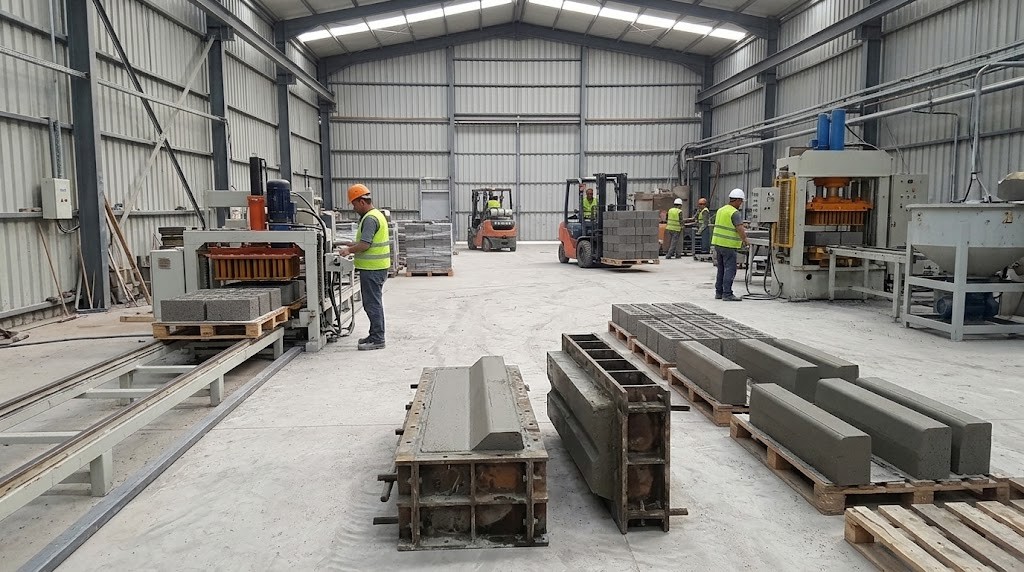
Kerbstone Mould Types and Standard Dimensions
Choose kerbstone moulds by application, profile, and machine compatibility, using approved drawings
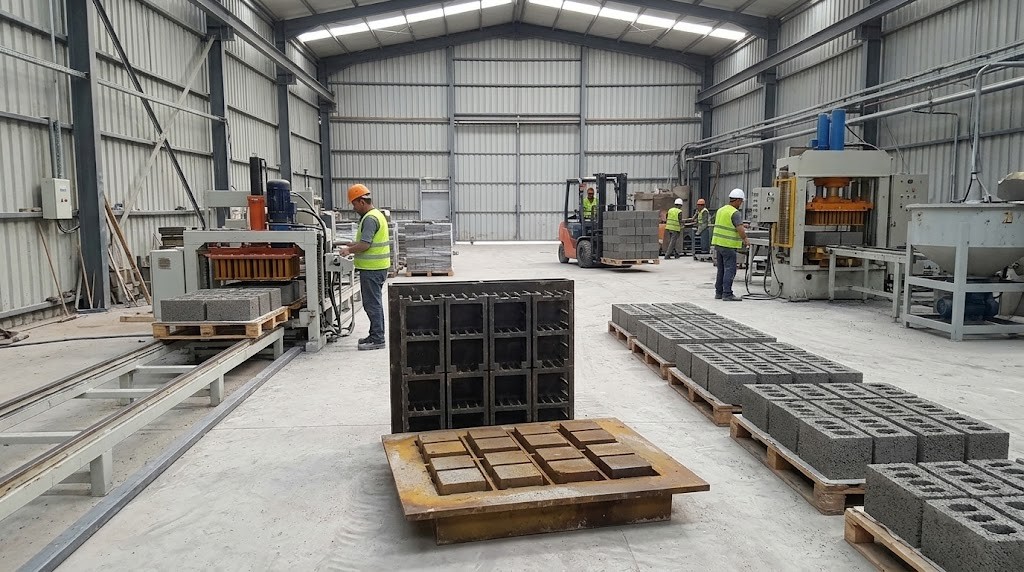
Selection Criteria for Pumice Block and Hollow Floor Block Moulds
Check product geometry, machine connections, pallet layout, and maintenance needs when selecting mou
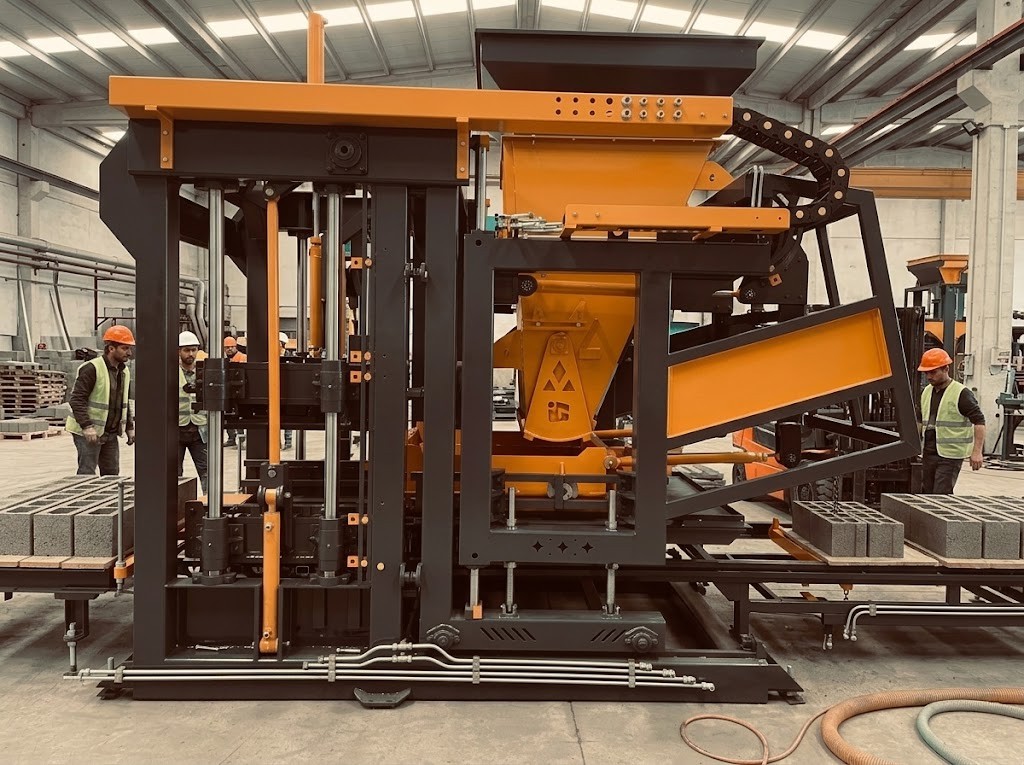
Pumice Block, Hollow Floor Block and Concrete Block Production: Choosing the Right Machine
Match product dimensions, mix requirements, moulds, and changeover needs to a machine suited to your
Factors Affecting Automatic Concrete Block Machine Prices
Compare automation, mould options, auxiliary equipment, and installation needs to understand what an