


NBM 5025 Reliable Dual Production Machine
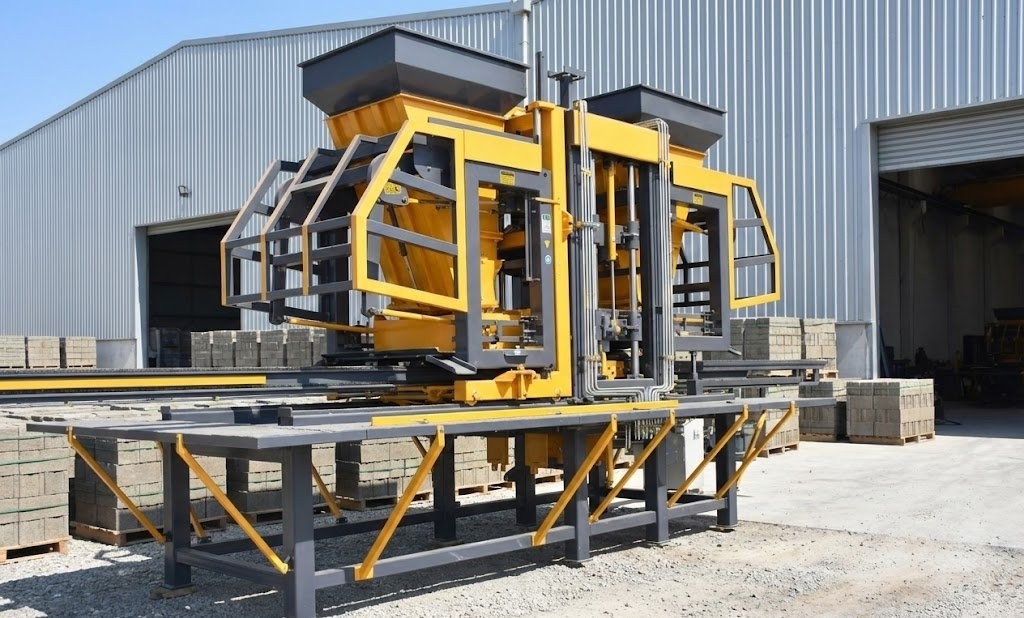
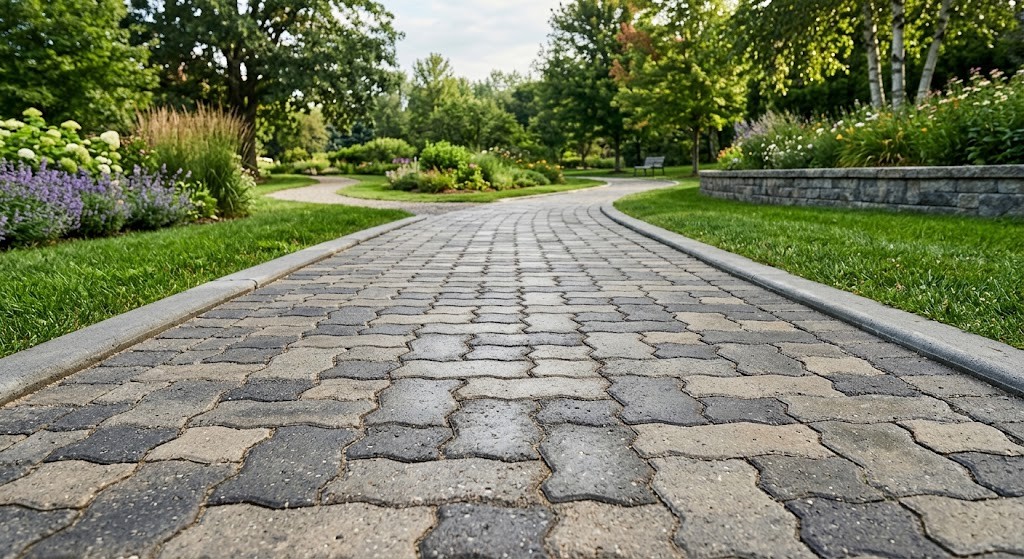
The NBM 5025 reliable dual production machine stands out with its compact vibro press technology, which can process two different concrete product groups – blocks and paving stones – on the same production line with high efficiency. The concept of dual production offers a strategic advantage for plants that want to increase product diversity and make production flow more flexible. This machine has been engineered to combine press force with vibration performance within the same cycle, ensuring the same quality standards in both block and paving stone production. This feature increases production reliability and makes it possible to obtain consistent results along the entire line.
In plants engaged in mixed-type production, the main challenge is that different products require different compaction densities and mold characteristics. The synchronized vibration and pressing system of the NBM 5025 provides the adaptability needed to meet these different requirements with a single machine. Field observations show that advanced presses with dual production capability can provide nearly 20% more flexibility in annual production planning compared with conventional single-purpose systems. This ratio offers a significant operational advantage, especially during periods of seasonal demand increases.
What Factors Determine Reliability in Dual Production Machines?
The core factor ensuring reliability in dual production machines is the ability of both the mechanical and vibration components of the machine to maintain stability while adapting to different product types. The quick answer is: reliability is achieved through a robust frame structure and a high-precision power transmission system.
The NBM 5025 features a rigid construction that distributes pressing loads evenly across the entire frame. This structure prevents deformation even during long vibration cycles and extends the machine’s service life. At the same time, PLC-controlled production mechanisms, preferred to reduce operator dependency, ensure that pressure and vibration settings remain identical in every cycle.
Structural Features That Enhance Reliability
-
Wear-resistant steel construction
-
High-strength mold interface surfaces
-
Synchronized motor and hydraulic system
-
Vibration-absorbing damper groups
-
Modular service zones that allow rapid intervention
All of these features support reliable operation of the machine under both heavy and long-term production conditions.
How Does Smart Design Provide an Advantage to NBM 5025 in Dual Production?
For a dual production setup to operate efficiently, the machine design must be planned with high engineering precision. The direct answer to this question is: smart design increases production flexibility by enabling fast transitions between different product types with minimal adjustment requirements.
The modular structure of the mold change system allows the operator to switch quickly between block and paving stone molds. While this duration can reach 45 minutes in conventional systems, advanced designs in the compact vibro press class can reduce mold change times to about 20–30 minutes.
Impact of Smart Design on Production
-
Less downtime between product types
-
Short preparation times during recipe changes
-
Automatic adaptation of vibration and press cycles
-
Maximum stability in load distribution
-
Longer service life of machine components
These outcomes create a competitive advantage, especially for plants that run mixed production.
How Does Vibration Technology Improve the Dual Production Performance of NBM 5025?
Vibration technology plays a critical role in both paving stone and block production because it is the main factor determining concrete compaction density. The quick answer: high-frequency vibration increases strength and surface quality in both product groups.
By design, surface clarity is a more critical parameter in paving stone production, while internal density is more important in block production. The vibration module of the NBM 5025 has the flexibility to generate a vibration curve suitable for the requirements of both production types. Operating in the range of 3800–4500 rpm, the mechanism ensures that the material is compacted ideally within the mold.
Advantages of Vibration Technology
-
Increased dimensional accuracy of products
-
Reduced risk of segregation
-
Controlled surface roughness
-
Reduced compaction time
-
Homogeneous material distribution
Maintaining vibration intensity at the same level in every cycle is highly important for reliability in production.
Technical Structure of the Vibration Mechanism
Eccentric Weight Units
They generate vibration through rotational motion and transfer it uniformly to the underside of the mold.
Synchronization Module
It aligns the pressing cycle with the vibration cycle, ensuring a consistent progression of the compaction process.
How Does the Power Transmission System Contribute to the Reliability of NBM 5025?
The power transmission system determines the stability of the machine in both paving stone and block production. The clear answer is: the power transmission system enables reliable operation of the machine by transmitting pressing force without loss.
The harmony between the electric motor, hydraulic pump group and pressure valves creates a controllable pressure curve during production. Since pressure fluctuations can cause dimensional deviations in products, power transmission stability is a critical factor in dual production.
Core Components of the Power Transmission System
-
High-torque motor
-
Hydraulic power unit
-
Pressure control valves
-
Press cylinder mechanisms
-
Torque compensation system
This configuration ensures that the machine delivers the same performance in every cycle, even on high-throughput production lines.
Why Is Mold Technology Important for Dual Production?
Mold technology is one of the most important components supporting dual production because blocks and paving stones require different geometric and mechanical characteristics. The direct answer is: as mold quality increases, product accuracy improves and scrap rates decrease.
Molds produced from heat-treated steel maintain their shape under high pressure and vibration, offering long service life. This creates a cost advantage in dual production, where molds are used intensively.
Why Does the Automation Infrastructure Play a Critical Role in Dual Production?
The automation infrastructure is the decision-making mechanism that enables dual production to operate reliably. The quick answer to this question is: automation ensures error-free production by maintaining parameter alignment between block and paving stone modes.
PLC-based controls allow critical variables such as vibration frequency and press pressure to be stored separately for each product type and automatically applied when needed. This makes recipe changes possible without operator dependency.
Contributions of Automation to Production
-
Parameter consistency
-
Reduction of operator errors
-
Production log recording
-
Real-time sensor-based monitoring
-
Fault detection functions
This infrastructure ensures stability and high quality in production.
How Does Energy Efficiency Affect the Operational Performance of NBM 5025?
Energy consumption is one of the largest expense items in concrete production plants. Therefore, an energy-efficient dual production machine directly reduces operating costs. The answer is: energy efficiency is achieved through optimized motor and hydraulic design.
The use of high-efficiency motors, modulation of the vibration cycle and reduced friction in the hydraulic system can generate energy savings of around 10% in total consumption. This ratio provides a significant cost advantage on an annual basis.
Structural Features That Support Energy Savings
-
High-efficiency motor class
-
Optimized hydraulic flow
-
Variable speed drives
-
Low-loss connection systems
Energy efficiency supports both economic and environmental sustainability.
How Does Ease of Maintenance Increase the Reliability of NBM 5025?
The ease of maintenance is a major factor in determining the long-term reliability of the machine. Put definitively: easy maintenance means fewer failures and higher production continuity.
Thanks to modular service points, the operator can quickly access hydraulic valves, the electrical cabinet, vibration bearings and mold connection surfaces. It is known that system failures can be reduced by up to 40% in presses that are regularly maintained.
Basic Maintenance Steps
-
Checking hydraulic oil and pressure
-
Inspecting the bearings of the vibration module
-
Tightness testing of electrical connection points
-
Cleaning and deformation analysis of mold surfaces
-
Performing sensor calibration measurements
These checks are critical for reliable production.
How Does Product Quality Demonstrate the Results of Reliable Dual Production?
Product quality is the most concrete outcome that demonstrates the success of dual production machines. Strength, surface smoothness and dimensional precision in blocks and paving stones are the main criteria that define quality. Stated directly: high quality is proof that dual production is running reliably.
Thanks to the synchronization of vibration and pressing, the same density is achieved in all layers of the concrete. This provides superior quality both in load-bearing blocks and in paving stones where surface detail is crucial.
Factors Affecting Product Quality
-
Compatibility of the concrete mix design
-
Vibration frequency
-
Stability of pressing pressure
-
Mold precision
-
Accuracy of operator settings
Effective management of these factors enables plants to achieve higher customer satisfaction in the market.
With its reliable dual production architecture, powerful vibration technology, optimized hydraulic system and smart automation infrastructure, the NBM 5025 emerges as an ideal solution for plants that aim to increase efficiency in concrete element production. Delivering consistent quality in both paving stone and block manufacturing makes this machine a reliable choice for long-term investment planning. Its robust structure, low energy consumption and easy maintenance features strengthen the operational performance of businesses and transform their production processes into a more sustainable model.