



NBM 4020 Smart Choice For Dual Manufacturing
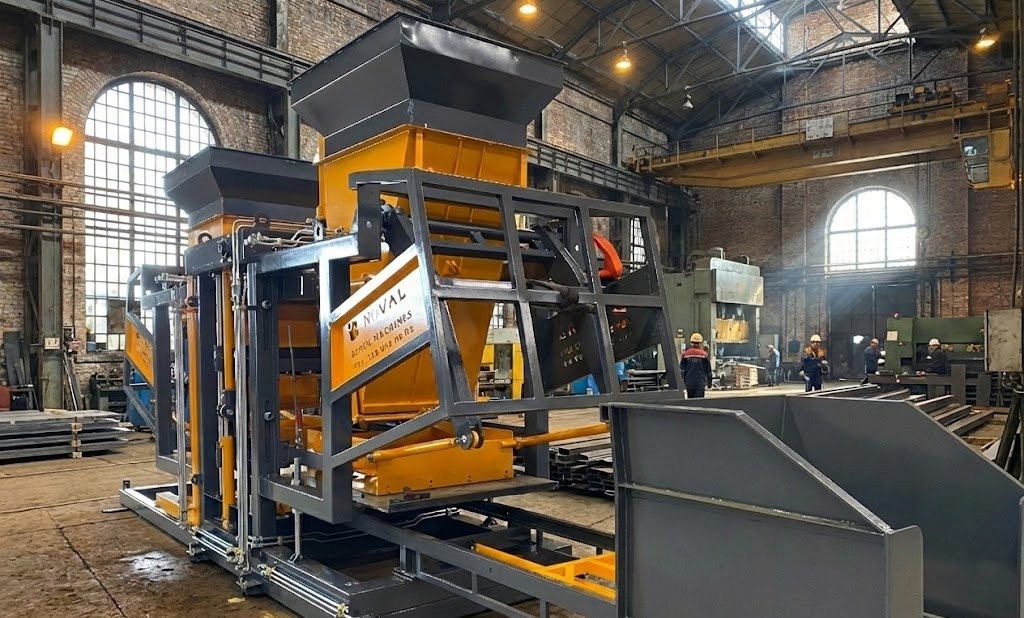
The NBM 4020 stands out as a high-performance solution engineered to elevate production efficiency for facilities requiring precise, stable, and scalable operation. Within the first phase of any modern masonry line, the need for a reliable dual manufacturing block machine becomes clear, since plants increasingly demand flexible equipment capable of producing both concrete blocks and interlocking pavers without compromising output quality. This model responds with exceptional structural stability, calibrated vibration technology, and controlled material handling that ensures every product reaches consistent density and dimensional accuracy. Its compact yet industrial-grade chassis supports continuous cycles under demanding workloads, allowing plants to maintain superior production standards while reducing operational disruptions.
What Makes The NBM 4020 A Smart Choice For Dual Manufacturing?
The NBM 4020 is considered a smart choice because it integrates synchronized vibration mechanics, advanced compaction geometry, and modular mold compatibility designed to support the simultaneous production of two core categories: structural concrete blocks and decorative or urban-use pavers. It performs this task through balanced force distribution and calibrated cycle control, enabling smooth transition between product types without extensive technical adjustments. The machine’s inherent rigidity prevents dimensional drift, maintaining uniform thickness, sharp edges, and stable compression across batches. This ensures that both block-type units and pavers achieve similar levels of consistency in physical performance and visual quality.
Production data from facilities operating dual manufacturing systems often show improved output efficiency when compaction stability is maintained within small tolerance ranges. On average, a stable vibration platform contributes to 10–15% better density uniformity. The NBM 4020 leverages this principle with industrial-grade alignment technology and a performance-tuned frame that minimizes vibration loss. Because the machine maintains mechanical integrity across long cycles, manufacturers experience fewer production interruptions and lower rejected-unit rates.
Dual-System Engineering That Supports Two Product Lines
Dual manufacturing requires a machine capable of handling two separate compaction profiles. Blocks demand deeper compression and uniform internal structure, while pavers require refined surface detailing and predictable thickness. The NBM 4020 achieves these outcomes through mold-specific vibration mapping. Its compaction system adjusts amplitude and frequency according to mold design, allowing both product types to reach optimal form without excessive manual recalibration. This engineering advantage dramatically reduces changeover time during multi-format production.
Structural Integrity And Alignment Stability
Reinforced load-bearing columns and high-density steel frames keep the machine aligned even under continuous operation. Structural drift poses a major risk to dual manufacturing, since block molds and paver molds differ in shape and pressure distribution. The NBM 4020’s frame resists deformation, maintaining linear platen movement across all cycles. This mechanical precision is crucial for facilities producing architectural pavers that require crisp edges and uniform surface texture.
Consistency Across Different Mix Designs
Blocks and pavers often require different mixture ratios, aggregate sizes, and moisture levels. The NBM 4020’s vibration regulation system compensates for these variations automatically. Whether the mix contains coarse aggregate for high-strength blocks or pigment-enriched fine aggregate for decorative pavers, the machine stabilizes compaction forces with real-time feedback mechanisms. This ensures predictable shaping and reduces the risk of surface tearing or internal voids.
How Does The NBM 4020 Improve Dual Manufacturing Efficiency?
The NBM 4020 improves efficiency through automated cycle control, optimized feedbox geometry, and precise mold handling mechanisms that reduce transition time between product formats. Efficient dual manufacturing requires a machine capable of adapting to multiple technical requirements without prolonged downtime.
Automated Cycle Coordination
Cycle accuracy enhances both structural and decorative product quality. The NBM 4020 uses precise timing controllers that monitor mold fill, compaction duration, vibration frequency, and release timing. By maintaining consistent intervals, the machine prevents premature surface drying and reduces dimensional variance between units. Even a small cycle delay can affect moisture distribution, especially in thin pavers, making automated coordination essential.
Material Flow Optimization
The feed system is designed to distribute aggregates smoothly across the mold surface. Dual manufacturing lines often encounter mixture separation when transitioning between coarse and fine materials. The NBM 4020 minimizes segregation through contoured feedbox walls and synchronized gate movement. More uniform material flow directly improves block density and enhances paver texture by preventing fine aggregate concentration in localized areas.
Mold Adaptability And Fast Changeovers
Dual manufacturing success relies on mold flexibility. The NBM 4020 incorporates quick-change mechanisms that reduce mold replacement time, enabling operators to switch between block and paver production without complex mechanical disassembly. Plants adopting modular mold systems typically reduce changeover time by 25–35%, significantly increasing daily output.
Operational Advantages That Strengthen Dual Manufacturing Performance
The operational advantages of the NBM 4020 extend beyond compaction precision. Energy efficiency, maintenance access, automation compatibility, and operator-friendly controls make it an ideal machine for plants targeting high-volume dual manufacturing.
Compact Industrial Design
Although it occupies a reduced footprint, the machine supports heavy-duty operation with consistent vibration stability. Compact size allows efficient layout planning in multi-stage production areas while improving access for inspection or mold maintenance. Facilities working within limited floor space benefit from this engineering advantage.
Energy Efficiency And Mechanical Optimization
Optimized vibration transfer improves energy consumption performance, reducing operational costs by approximately 10–18% depending on plant conditions and cycle rates. Lower energy waste also increases heat stability in the machine frame, preventing thermal expansion that could impact mold alignment.
User-Oriented Control System
Operators can adjust pressure, vibration intensity, feed timing, and mold cycle parameters through an intuitive interface. Real-time diagnostics help detect inconsistencies before defective units accumulate. Automation-ready communication protocols allow the machine to integrate with conveyor systems, curing chambers, and quality-control stations.
Maintenance Efficiency
Hydraulic lines, belts, and vibration motors are placed for fast access, allowing rapid inspections and reducing downtime. Dual manufacturing environments require more frequent mold cleaning and alignment checks, so fast maintenance access becomes a decisive advantage.
Product Categories Supported By The NBM 4020
Dual manufacturing requires versatility across multiple product types. The NBM 4020 accommodates a wide range of concrete units with varying compaction requirements.
Structural Concrete Blocks
The machine provides deep compaction suitable for structural walls and load-bearing applications. Uniform density enhances long-term durability and improves stacking precision. Blocks produced with stable vibration tend to show fewer internal voids and better compressive strength values.
Decorative And Interlocking Pavers
Pavers require high shape accuracy, vibrant surface texture, and consistent thickness. The NBM 4020’s precision vibration mapping maintains sharp edges and prevents pigment separation. These properties are crucial for landscape installations, pedestrian zones, and decorative pathways.
Curbstones And Urban Infrastructure Units
Curbstones demand stronger compaction pressure to withstand abrasion and weather exposure. The NBM 4020 supports thicker molds without cycle instability, ensuring stable compression throughout the unit.
Architectural Elements
Chamfered edges, split textures, or patterned surfaces retain their form when vibration is evenly distributed. The machine’s precision prevents micro-fractures and protects detailing that contributes to aesthetic value.
Technical Comparison Table For Dual Manufacturing
|
Engineering Aspect |
Functional Role |
Advantage For Dual Manufacturing |
|
Vibration System |
Controls amplitude & frequency |
Ensures consistency across blocks and pavers |
|
Mold Interface |
Retains calibration and alignment |
Reduces error during format transitions |
|
Feedbox Design |
Balances aggregate flow |
Improves surface quality on pavers and structural density in blocks |
|
Frame Rigidity |
Maintains mechanical stability |
Prevents deformation during long production cycles |
|
Control Panel |
Enables precise settings |
Supports rapid adjustments for multiple product types |
Material Science Considerations For Dual Manufacturing
Dual manufacturing involves working with varied mixture formulations, each requiring different compaction behavior. The NBM 4020’s engineering supports these demands.
Aggregate Distribution
Balanced aggregate gradation limits voids and enhances compressive strength. The machine’s feedbox design minimizes material separation, supporting consistent compaction whether using coarse block mixtures or fine-textured paver mixtures.
Moisture Management
Moisture levels influence workability and surface finish. Blocks may tolerate slightly higher moisture, while pavers require stable moisture to retain sharp detailing. The NBM 4020 maintains cycle timing that prevents premature drying, helping achieve stable outcomes across product lines.
Cement Hydration Control
Proper compaction supports uniform hydration, improving long-term strength. Even minor compaction imbalances can create micro-voids that weaken blocks or disrupt paver texture. Stable vibration ensures deeper and more uniform compression.
Workflow Benefits Of Using The NBM 4020
Efficient dual manufacturing depends on synchronized workflow between mixing, molding, curing, and stacking.
Streamlined Production Layout
The compact design of the NBM 4020 allows optimized alignment with mixers and conveyors. Reduced transport distance improves cycle timing and helps maintain mixture consistency.
Mold Change Efficiency
Because dual production demands frequent mold transitions, rapid-change systems provide meaningful operational gains. Reduced changeover time increases the number of product batches achievable within a single shift.
Integration With Quality Monitoring
Sensors tracking vibration, compaction load, and feed distribution support predictive maintenance. Early detection of irregularities prevents batch-wide issues and ensures steady product supply.
Durability And Lifecycle Performance
The NBM 4020 is engineered for continuous operation under high mechanical load, making it suitable for dual manufacturing environments with long production cycles.
Wear-Resistant Components
Critical parts such as vibration shafts, bearings, and mold surfaces are built from treated steel alloys that extend service life. Reduced wear ensures stable compaction pressures over longer operating periods.
Heat And Vibration Stability
Thermal stability prevents deformation under heat accumulation. Vibration isolation systems prevent resonance effects that could disrupt mold alignment or damage facility foundations.
Reinforced Mechanical Joints
High-impact joints ensure the machine withstands constant cycling without structural fatigue. This improves reliability and reduces mechanical deviation across multi-shift operations.
Practical Recommendations For Optimizing Dual Manufacturing
-
Regularly verify moisture content to avoid inconsistencies between block and paver batches.
-
Clean and inspect molds daily to preserve alignment accuracy.
-
Monitor vibration frequency for deviations, which may indicate wear or improper material distribution.
-
Record production data to identify performance trends and improve mixture planning.
Advancing Dual Manufacturing With Precision Engineering
The NBM 4020 strengthens modern dual manufacturing by combining robust construction, precision compaction, and adaptable mold technology. As architectural demands evolve and the construction sector increases its reliance on visually refined yet structurally reliable concrete units, machines capable of delivering stable multi-format output become essential. The NBM 4020 aligns with these industry trends by offering high repeatability, efficient energy usage, and strong operator control mechanisms that support scalable production. Its engineered balance of adaptability and durability ensures that manufacturers can meet diverse market requirements while maintaining exceptional product quality.