


Interlocking Paving Stone Making Machine Working Principle
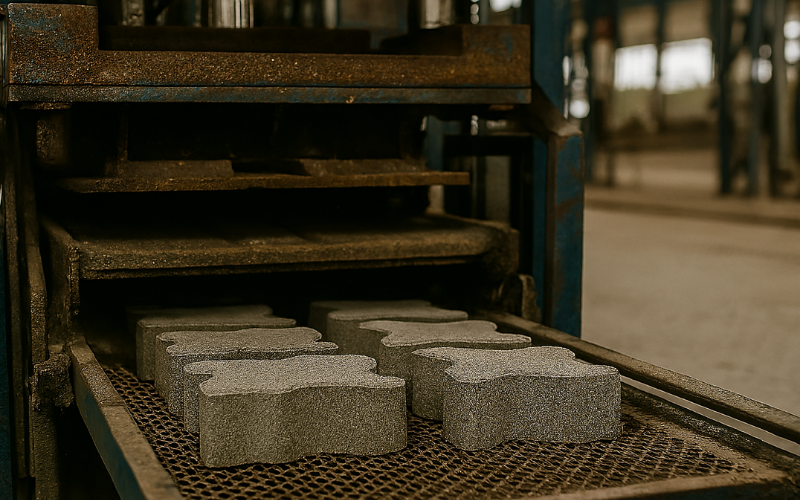
An interlocking paving stone making machine is an advanced industrial system designed to produce high-quality, precisely shaped interlocking concrete pavers used in roads, sidewalks, parking areas, and landscaping projects.
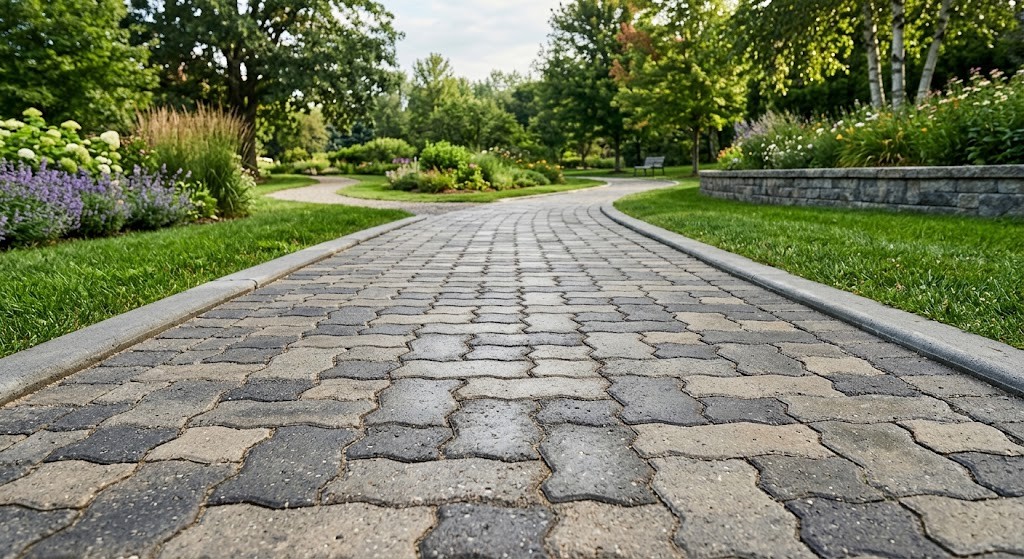
The interlocking pavers produced by these machines fit together perfectly without the need for mortar, creating durable, flexible, and aesthetic surfaces.
This technology ensures strength, consistency, and efficiency — essential in modern urban infrastructure and construction industries.
To understand the precision and reliability of these systems, let’s explore the working principle of an interlocking paving stone making machine.
1. Material Preparation and Feeding
The process begins with the preparation of the raw materials — cement, sand, gravel, water, and often pigments or additives to improve color and strength.
The materials are mixed thoroughly in a concrete mixer until a uniform consistency is achieved. The ready mix is then transferred to the machine’s hopper, where it is stored temporarily for the production cycle.
Modern systems use automatic feeding conveyors that deliver the exact amount of concrete into the mold section, ensuring uniform distribution and minimal waste.
2. Filling the Mold
Once the mix reaches the mold box, it is evenly filled into cavities that determine the shape and dimensions of the paving stones.
The molds can be customized to produce various types of interlocking patterns such as zig-zag, I-shape, hexagon, or rectangular designs.
High-quality steel molds with surface treatments are used to ensure dimensional precision, durability, and long service life during continuous operation.
3. Vibration and Hydraulic Compaction
This stage represents the core working principle of the interlocking paving stone making machine.
When the mold is filled, the machine applies intense vibration and hydraulic pressure simultaneously to compact the concrete mixture and remove any trapped air.
How It Works:
-
Vibration System: High-frequency vibration helps distribute the material evenly inside the mold and achieves a smooth surface texture.
-
Hydraulic System: Exerts vertical pressure on the mold, compressing the mixture to a high density and ensuring superior structural strength.
The synchronization of vibration and hydraulic force guarantees that each paving stone is solid, durable, and resistant to weathering and load stress.
4. Demolding and Ejection
After compaction, the hydraulic system lifts the mold while the newly formed paving stones remain on a pallet or conveyor belt below.
The demolding process is quick and precise, preventing deformation or surface damage. The stones are then transferred to a curing area where they undergo the hardening process.
The machine’s automated cycle resumes immediately, allowing for continuous, high-volume production with consistent results.
5. Curing Process
Curing is a crucial step in the production of interlocking paving stones, as it determines their final strength, durability, and color consistency.
Curing Methods:
-
Steam Curing: Used in industrial plants to accelerate production, ensuring uniform hardening.
-
Natural Curing: The pavers are left to dry in controlled environmental conditions for several days.
Proper curing improves the pavers’ compressive strength and ensures resistance against temperature changes, moisture, and heavy loads.
6. Stacking and Packaging
Once curing is complete, the paving stones are automatically stacked, counted, and packaged using palletizing systems.
This process minimizes handling damage and prepares the finished products for transportation or on-site installation.
Advanced plants integrate robotic palletizing systems for increased speed, safety, and accuracy.
Types of Interlocking Paving Stone Making Machines
1. Manual Machines
Suitable for small-scale production, these machines require manual feeding and operation. Ideal for entry-level markets but limited in capacity.
2. Semi-Automatic Machines
Combine manual material handling with automatic vibration and compaction systems. They offer a balance between cost and productivity.
3. Fully Automatic Machines
Equipped with PLC control systems, these machines handle every stage — from feeding and molding to curing and stacking — with minimal human intervention. They deliver the highest precision, consistency, and output for industrial-scale manufacturing.
Advantages of Interlocking Paving Stone Making Machines
-
High Strength Output: Hydraulic and vibration compaction ensure maximum density and load-bearing capacity.
-
Uniform Quality: Automated systems maintain consistency in size, shape, and color.
-
High Efficiency: Continuous operation enables large-scale production with reduced downtime.
-
Energy and Labor Savings: Automation lowers operational costs while improving precision.
-
Customizable Production: Quick mold changes allow for diverse paving designs.
The working principle of an interlocking paving stone making machine is based on a seamless combination of hydraulic pressure and vibration technology, supported by advanced automation.
This process transforms raw concrete into strong, uniform, and aesthetically appealing paving stones, meeting global standards for construction and infrastructure.
From municipal projects and commercial spaces to residential landscapes, these machines ensure long-lasting surfaces that enhance both function and design — making them a cornerstone of modern paving technology.