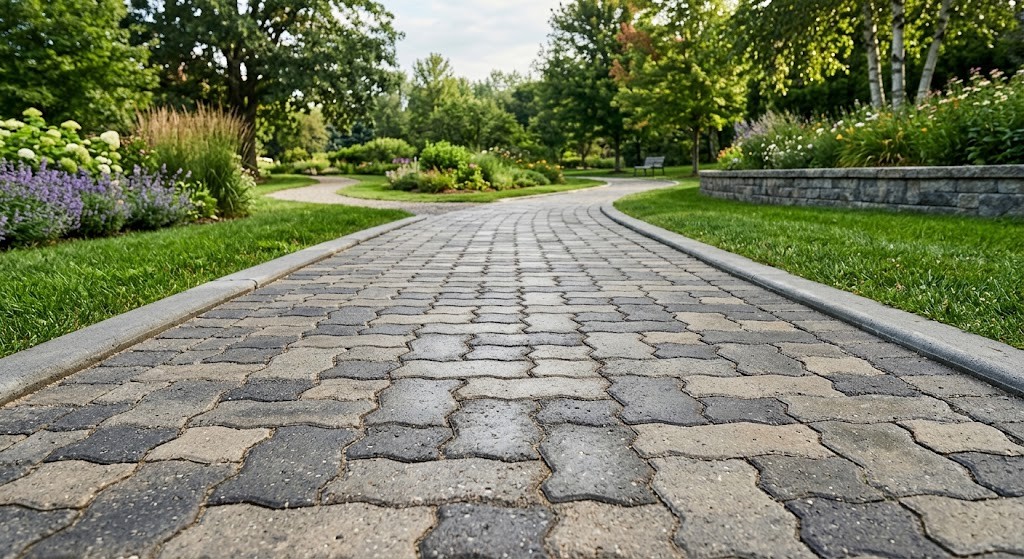



Fundamental Dynamics of Increasing Efficiency in Production with Durable Interlock Stone Molds

Durable interlock stone molds provide a strategic advantage for businesses seeking speed, accuracy, and long-term durability in the production of paving elements. To ensure a natural transition within the first 100 words, interlock stone molds become one of the essential components that enhance efficiency by offering geometric precision and surface quality throughout production processes. Considering high pressing forces, intense vibration cycles, and continuous operational tempo, mold durability shapes not only product quality but also a significant portion of operational costs. Maintaining mold form, repeating surface detail consistently, and resisting high production volumes create a competitive advantage over time on production lines. Industry measurements reveal that facilities using durable molds experience up to a 60% reduction in production downtime.
How Do Durable Interlock Stone Molds Increase Production Efficiency?
Durable interlock stone molds increase production efficiency because molds that maintain form stability ensure consistent dimensional accuracy and surface quality in every cycle. Even small deformations during production can disrupt the locking mechanism of stones and cause alignment issues during installation. Therefore, mold durability becomes a critical efficiency indicator for both manufacturers and installers. High-density polymer or metal-reinforced composite systems provide maximum resistance to mechanical loads generated during vibration and pressing processes, ensuring stability in serial production. Faster demolding cycles increase workforce efficiency, while reduced adjustment requirements prevent disruptions in production rhythm.
Performance analyses carried out in modern facilities show that production lines using durable molds achieve a 20–25% increase in daily capacity on average. Additionally, the reduction in surface defects shortens quality-control time per product, increasing overall workflow speed. Combined, these factors create measurable efficiency gains at every stage of production.
Engineering Foundations of Durable Mold Structures
The engineering quality of durable interlock molds depends on variables such as material density, elasticity coefficient, wall thickness, heat resistance, and the ability to maintain form under vibration. Balanced optimization of these variables makes long-lasting, high-performance molds possible.
ABS-derived polymers used in polymer-based molds offer advantages due to their impact resistance, elastic recovery capability, and ability to process fine surface details. Their low thermal expansion coefficient prevents changes in mold edge angles during long casting cycles. Metal-reinforced systems maintain dimensional accuracy in high-frequency vibration environments thanks to their structural durability. In terms of surface texture quality, hybrid technologies reliably reproduce natural stone appearances with high precision, meeting architectural project demands.
Engineering analyses show that durable molds preserve form stability for over 2,500 casting cycles, whereas low-quality molds typically last between 500 and 800 cycles. This difference becomes decisive in long-term production cost planning.
Durable Material Technologies Used in Interlock Molds
Materials that enhance durability affect not only mold lifespan but also the performance of the produced stones in the field. ABS composites combine lightness and strength, allowing operators to demold and reload molds quickly. Polypropylene-based systems prevent form deformation in high-temperature environments. Rubber-polymer hybrid molds reproduce micron-level surface detail in designs requiring intricate textures, elevating aesthetic quality.
Metal-reinforced molds are particularly preferred in heavy industrial environments and production lines requiring high pressing pressure. Their low thermal expansion coefficient prevents geometric deformation throughout production. Stones produced with these materials require minimal cutting during installation and offer faster alignment.
Structural Advantages Provided by Durable Molds in the Production Process
Durable interlock stone molds offer structural advantages at every stage of production. When lubrication is applied uniformly before casting, surface quality increases and demolding becomes easier. Preventing microscopic deformation on mold surfaces ensures consistent texture across hundreds of stones.
During vibration and pressing, the impact of durable molds becomes more evident. Molds that maintain form under high-frequency vibration ensure even distribution of the concrete mixture. This strengthens the internal structure of the stone and allows compressive strength to reach 45–55 MPa, a value considered ideal for areas exposed to heavy vehicular loads and logistics operations.
Preserving the geometric accuracy of the mold directly affects the integrity of stone edges during curing. Controlled curing at 18–22°C increases stone strength by around 20%. Mold stability during this stage directly determines final product performance.
Mold Durability Supporting Design Diversity
Durable molds enhance not only technical performance but also design flexibility. S-type interlocking stones, hexagonal geometries, classic rectangular modules, permeable paving stones, and herringbone patterns can all be produced with high precision thanks to durable molds. Granite textures, rough anti-slip surfaces, and micro-textured modern designs maintain consistency even in long casting cycles.
Their compatibility with UV-stable pigments ensures that fading remains within the 4–6% range even after prolonged sun exposure, which is critical for visual consistency in outdoor projects.
Effects of Efficiency Gains on Production and Cost
Durable molds accelerate production and reduce costs. Faster demolding reduces cycle time and lowers labor expenses. Reduced downtime caused by deformation or malfunction contributes to increased annual production quantities. Lower defect rates during quality control prevent material and workforce losses.
Manufacturers report a 30–40% improvement in total costs over the lifespan of durable molds. Their long-term form stability reduces the need for frequent mold replacements, simplifying budget management.
Relationship Between Durable Molds and Field Performance
Regardless of production quality, field preparation significantly influences stone durability. A sub-base compacted to 95% Proctor density, an 8–12 cm stabilized crushed stone layer, and a 3–5 cm fine sand bedding layer support the locking mechanism of the stones. Stones produced with durable molds have sharper edges and more accurate lock points, minimizing joint gaps. Using washed dry river sand for joint filling reduces horizontal movement risks.
Properly designed drainage prevents water accumulation and improves resistance to freeze–thaw cycles. Areas with correct drainage show up to a 40% reduction in deformation rates.
Future Interlock Mold Technologies
Advancing technology continues to make durable interlock molds even more innovative. Sensor-based production lines monitor vibration intensity, pressing pressure, and curing temperature in real time, enabling automatic optimization. These systems reduce error rates by up to 30%. CAD/CAM-based digital modeling increases geometric precision by up to four times compared to traditional methods, offering unmatched consistency in large-scale projects.
Increasing use of recycled polymer-based materials supports environmental sustainability and reduces mold weight, improving operator ergonomics. Ultra-tight texture-tolerance technologies can reproduce natural stone surfaces with up to 90% detail accuracy, setting a new standard in landscape applications.
Recommendations for Professional Manufacturers and Installers
When using durable interlock stone molds, surface checks should be performed before every casting, mixture moisture should be maintained at proper levels, and vibration duration should be adjusted according to mix workability. Curing room temperature and humidity must be controlled, curb stabilization should be ensured during installation, and joint filling must be fully compacted through vibration. This approach ensures long-lasting, high-performance paving both in production and in the field.
Durable interlock stone molds are among the most critical tools in modern paving technologies for increasing efficiency, reducing costs, and achieving high durability. When engineering, material quality, and proper application techniques come together, these systems produce long-lasting, aesthetically strong, and structurally reliable surfaces.