



Increase Efficiency with NBM 5025
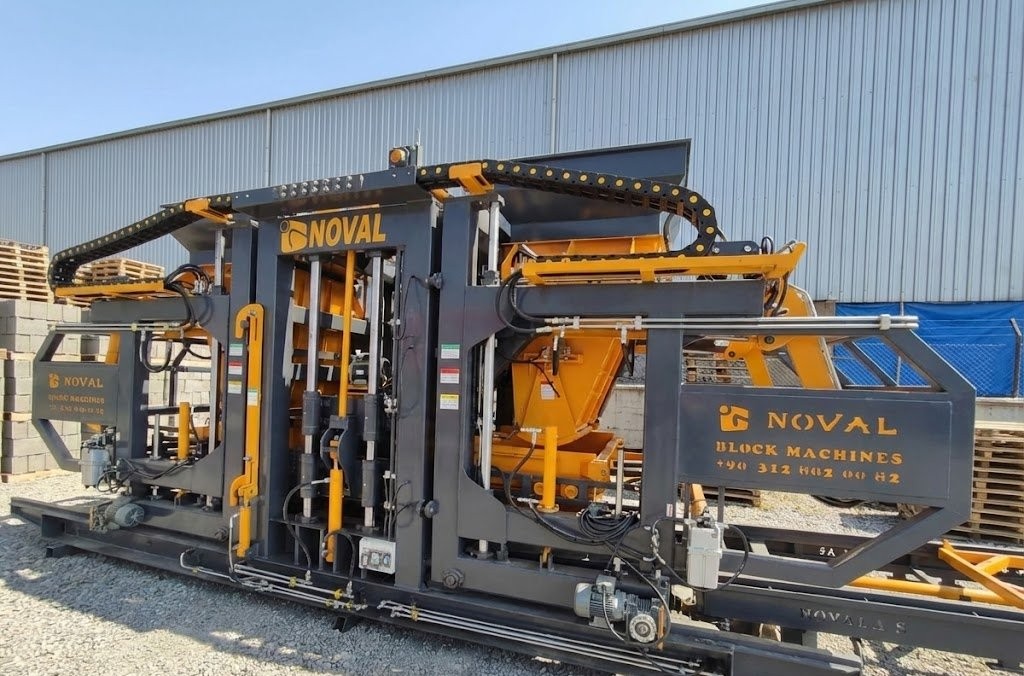
Increasing efficiency with NBM 5025 is based on the concrete, measurable results provided by compact vibro press technology, which can combine speed, power and precision within production plants. This press system shortens production cycles while increasing dimensional consistency of the concrete elements produced and reducing scrap rates. Higher production speed is not only a function of machine capacity; it emerges from the integrated interaction of elements such as pressing force, vibration synchronization and mold compatibility. Performance measurements in modern concrete production facilities report that machines in the compact vibro press class offer on average 12–20% higher cycle efficiency compared with outdated presses.
The compact body and rigid construction of the NBM 5025 ensure stability during vibration, allowing the pressing force to be transmitted fully to the mold. This stability supports more homogeneous compaction and higher strength in the end products. The reduction of micro-deviations that cause time loss in production provides a significant advantage especially in the manufacture of paving stones, kerbs and block elements. Analyses show that improved compaction uniformity can increase product strength by up to 10%.
What Is the Impact of the Compact Design of NBM 5025 on Efficiency?
Thanks to its compact design, the NBM 5025 enables more efficient use of plant space, and the close positioning of all machine components minimizes losses in power transmission. The direct answer is: the compact design optimizes the production area, reduces energy losses and contributes to shorter cycle times.
The installation space requirement of compact press systems is on average 18–22% lower than that of conventional wide-frame presses. This ratio reduces investment costs for small and medium-sized plants and allows more flexible layout of production lines in larger facilities. In addition, the compact design ensures that vibration frequency is distributed more evenly through the machine body, creating a more controlled effect on both the mold and the product.
Components of the Compact Design
-
Steel frame with optimized load distribution
-
Vibration-absorbing damper points
-
High-torque motor group with low energy consumption
-
Connection systems that increase mechanical stability
-
Hydraulic modules suitable for use in limited spaces
When these components work together, vibration forces generated during production are transmitted efficiently to the mold and unnecessary energy losses during the pressing cycle are prevented.
How Is Efficiency Increased with Vibration Technology?
The advanced vibration technology of the NBM 5025 ensures that the concrete mix is compacted inside the mold at the most ideal density. To answer the question directly: vibration technology increases product strength, shortens cycle time and reduces error rates, thereby raising overall efficiency.
The frequency ranges used in vibro presses are critically important for the optimum placement of concrete aggregates. High-frequency systems operating between 3800–4500 rpm reduce the void ratio and create a more compact structure. As the void ratio decreases, concrete strength increases and sharp, well-defined edges are obtained on product surfaces. This process creates measurable differences in strength tests; for example, the compressive strength of paving stones subjected to high-frequency compaction can increase by up to 12%.
Advantages of Vibration Technology
-
Reduced risk of concrete segregation
-
Homogeneous compaction within the mold
-
Shorter pressing cycle
-
Clear contour lines on product surfaces
-
Lower energy consumption per cycle
One of the most important elements ensuring the stability of vibration performance is the eccentric weight system.
Technical Components of the Vibration Mechanism
Eccentric Weight Module
It transfers vibration intensity to the mold through rotational motion and provides operator-controlled power modulation via frequency adjustments.
Synchronous Vibration Control
The synchronization between the pressing cycle and the vibration cycle is maintained; thanks to this harmony, the same compaction level is achieved in both the upper and lower layers of the concrete.
What Is the Role of the Power Transmission System in Efficiency?
The power transmission system of the NBM 5025 is designed to transfer pressing force directly and with minimal loss. The quick answer: the power transmission system generates high torque, minimizes hydraulic pressure loss and stabilizes the pressing cycle, thereby increasing efficiency.
The hydraulic pumps and motors in the power unit operate at high pressure values; as long as the pressure drop does not exceed roughly 3%, thickness tolerances of the products remain more stable. As pressure loss increases, deviations in production tolerances grow, while keeping it low is critical for efficiency.
Power Transmission Components
-
High-torque electric motors
-
Hydraulic pump set
-
Pressure balancing valve system
-
Press cylinder mechanism
-
Torque stabilization systems
Thanks to these components, the pressing stage applies the same pressing force in every cycle, establishing repeatable quality standards.
How Does NBM 5025 Affect the Shortening of Production Cycle Time?
The most important features of the NBM 5025 that shorten cycle times are the fast mold filling system, vibration synchronization and hydraulic speed control mechanisms. When cycle time is reduced, more products are obtained within the same shift and efficiency increases directly.
Production analyses show that cycle times in modern vibro presses can be reduced to the range of 12–18 seconds. This figure can increase total annual production capacity by more than 15%, especially in plants with high production volumes.
Factors That Reduce Cycle Time
-
Fast filling and discharge mechanism
-
Optimized hydraulic flow rate
-
Rapid compaction with intense vibration
-
Stable pressing pressure
-
Reduced mold change times
When these variables come together, the production process becomes smoother and downtime is minimized.
What Is the Impact of Mold Technology on Efficiency?
Mold technology is one of the fundamental determinants of production efficiency. Mold precision, durability and changeover times directly affect flow on the production line. To answer directly: mold technology increases product diversity, reduces transition times and enables continuous production, thereby raising efficiency.
Heat-treated steel molds are long-lasting and resistant to surface deformation. With high-strength molds, both product surface quality improves and less scrap is generated thanks to maintained mold tolerances. This provides stability in production planning.
Impact of Mold Change Times
Average mold change times of 20–30 minutes offer a significant advantage in terms of production flexibility. The shorter this duration, the more flexible the production line becomes and the faster customer demands can be met.
How Is Efficiency Enhanced with Automation Systems?
The automation software of the NBM 5025 is built on an advanced PLC-based infrastructure that allows the operator to control all production parameters. The clear answer: automation reduces operator dependency, increases production accuracy and minimizes process errors, thereby improving efficiency.
Through automatic recipe management, vibration frequency adjustment and press pressure control, the same quality standard is achieved in every cycle. Industrial measurements show that automation systems can reduce operator errors by around 35–45%.
Automation Components
-
PLC control panel
-
Sensor data management system
-
Fault detection algorithms
-
Hydraulic and vibration synchronization
-
Production log recording system
This structure supports plants in achieving advanced efficiency targets.
Why Is Energy Efficiency a Critical Factor in Increasing Efficiency?
Energy consumption constitutes a large part of costs in concrete production plants. The optimized motor and hydraulic systems of the NBM 5025 are designed to improve energy efficiency. The quick answer: energy efficiency lowers operating costs, supports sustainable production and increases efficiency in the long term.
Thanks to energy-efficient motors and the vibration modulation system, more output can be achieved with the same power. Energy savings in the range of 8–12% create a significant cost advantage in plants with high annual production volumes.
Structural Features That Provide Energy Savings
-
High-efficiency motor class
-
Optimized hydraulic flow
-
Integration of variable speed drives
-
Low-friction mechanical components
These elements reduce not only energy consumption but also maintenance costs and machine wear.
How Does Ease of Maintenance Support Production Continuity?
The NBM 5025 provides fast intervention opportunities by positioning parts that require maintenance at easily accessible points. The answer is clear: ease of maintenance reduces downtime and increases efficiency by maintaining production continuity.
It is known that periodic maintenance can reduce the risk of failure in machines by about 40–50%. Thus, the machine continues to deliver stable performance even in long-term use.
Basic Maintenance Steps
-
Checking hydraulic pressure and oil level
-
Inspecting vibration bearings
-
Checking the tightness of electrical panel connections
-
Cleaning and deformation analysis of mold surfaces
-
Performing sensor calibration checks
Regular implementation of these steps ensures reliable production.
What Is the Indirect Impact of Product Quality on Efficiency?
As product quality increases, the scrap rate decreases and production efficiency rises directly. With its high pressing force and vibration synchronization, the NBM 5025 ensures dimensional stability in products. The quick answer is: higher product quality reduces the need for rework and thus increases efficiency.
Investigations carried out on high-capacity production lines show that the rate of out-of-tolerance products in concrete elements manufactured with precision vibro presses can be reduced to as low as 1–2%. This is a major factor that directly affects annual production capacity.
Thanks to advanced vibro press technology, compact design, optimized hydraulic system and modern automation infrastructure, the NBM 5025 offers a powerful solution for plants aiming to increase production efficiency. The advantages provided by systemic harmony support both production quality and operational performance in a stable way over the long term.